Best 1 Ton Jumbo Bags for Global Suppliers and Buyers?
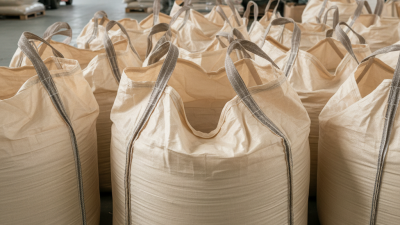
In the competitive world of packaging, 1 ton jumbo bags stand out as a practical choice for global suppliers and buyers. These bags, designed for heavy-duty loads, are essential in various industries. Their durability and versatility make them ideal for transporting bulk materials. Yet, finding the best options requires careful consideration.
When selecting 1 ton jumbo bags, one should evaluate factors such as material quality, load capacity, and production standards. Not all suppliers meet the required benchmarks. Some bags may seem cost-effective but lack reliability. This can lead to significant losses during transportation. Beyond price, it’s crucial to assess a supplier's reputation and expertise in the market.
Different suppliers may offer unique features in their 1 ton jumbo bags. Some might provide customization options for specific needs. However, it’s vital to ensure these claims are backed by solid performance data. As you navigate this landscape, take time to explore your options. Be critical and informed about your choices to secure the best bags for your projects.
Types of 1 Ton Jumbo Bags Available in the Global Market
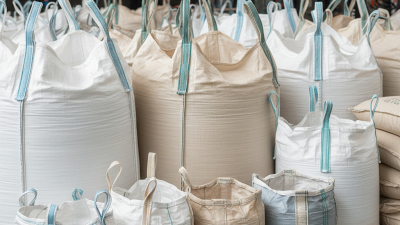
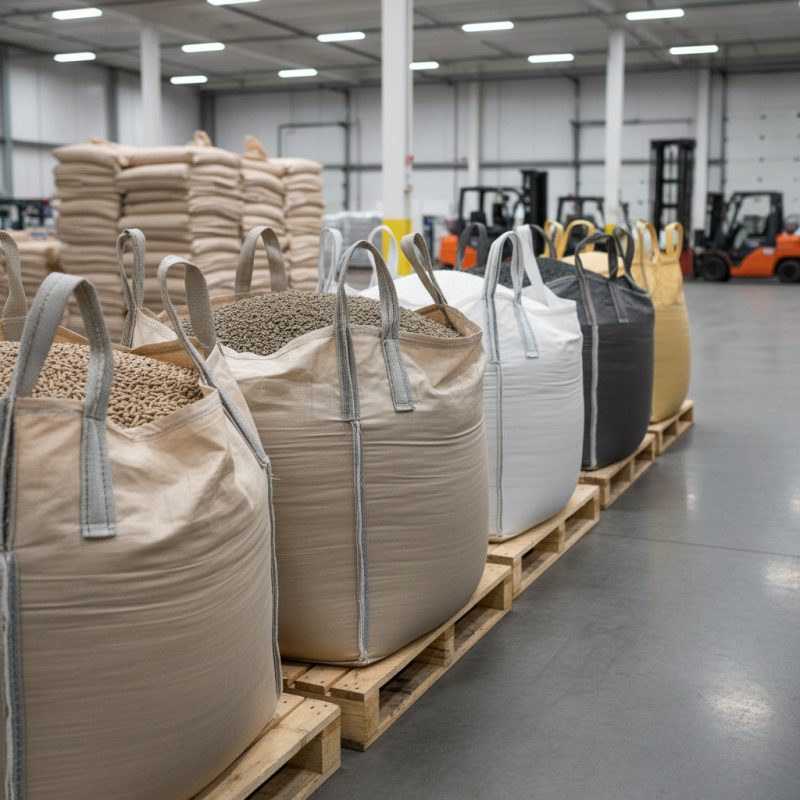
The global market offers a variety of 1 ton jumbo bags, each designed for specific needs. These bags typically come in several types, including Baffle Bags, UN Bags, and Ventilated Bags. Baffle Bags are equipped with internal baffles, helping them maintain their shape and maximize space. This feature is useful for storing and transporting bulk materials. However, they can be more complex to manufacture.
UN Bags meet international shipping regulations for hazardous materials, ensuring safety during transport. Their construction often includes durable fabrics and specific stitching patterns. The reliability of UN Bags is critical, given the potential risks involved. Notably, using improper bags may lead to compliance failures and hazards.
Ventilated Bags are ideal for products that require airflow, like agricultural products. These bags have openings to allow moisture to escape. While effective, they may also expose contents to contaminants if not produced correctly. Subpar ventilation can damage sensitive materials. Thus, selecting the right type of jumbo bag requires careful consideration of material and purpose.
Best 1 Ton Jumbo Bags for Global Suppliers and Buyers
| Bag Type |
Material |
Applications |
Features |
Capacity (kg) |
| U-Panel Jumbo Bag |
Polypropylene (PP) |
Granules, Fertilizers |
High Strength, UV Resistant |
1000 |
| Sewn Top Jumbo Bag |
Polypropylene (PP) |
Food Products, Chemicals |
Customizable, Multi-Functional |
1000 |
| Conical Jumbo Bag |
Polyethylene (PE) |
Powdered Substances |
Easy Flow Design |
1000 |
| FIBC Jumbo Bag |
Woven Fabric |
Construction, Mining |
Reusable, Eco-Friendly |
1000 |
| Baffle Jumbo Bag |
Polypropylene (PP) |
Bulk Powders, Grains |
Stability, Space-Efficient |
1000 |
Key Features to Consider When Selecting Jumbo Bags
When selecting jumbo bags, understanding key features is crucial. Look for the material quality. High-density polyethylene (HDPE) and polypropylene are commonly used. These materials provide durability and resistance to various environmental conditions. Consider the bag's weight capacity too. A reliable one-ton jumbo bag should handle significant loads while maintaining structural integrity.
Another important aspect is the bag's design. Look for options that feature reinforced stitching and seams. This increases the bag’s lifespan and prevents leaks or spills. Additionally, some bags come with features like U-panel designs, which offer better distribution of weight. Think about size and dimensions as well. The right fit can optimize storage and transport efficiency.
Don’t overlook certifications. Choosing bags that comply with industry standards enhances reliability. Investigate the supplier’s reputation, too; feedback from prior customers can offer invaluable insights. If a supplier lacks clear quality control measures, it may be a red flag. Evaluating these details can lead to better decisions, even if they require careful scrutiny.
Best 1 Ton Jumbo Bags for Global Suppliers and Buyers
Comparison of Leading Manufacturers and Suppliers of Jumbo Bags
When selecting the best 1-ton jumbo bags, it's crucial to understand the offerings of various manufacturers and suppliers. These bags, often used for industrial applications, come in diverse materials and designs. Evaluation should prioritize bag strength, durability, and capacity. Many manufacturers provide test certifications to validate their claims, but potential buyers should independently verify these assertions.
Leading suppliers often focus on innovation to meet customer needs. Some companies experiment with eco-friendly materials in their jumbo bags, aligning with global sustainability trends. However, not all innovations guarantee practical effectiveness. It’s essential to request samples and conduct field tests before making bulk purchases. Individual supplier reliability can vary significantly. Partnering with a trustworthy supplier can enhance operational safety and efficiency.
While pricing is a significant factor, it shouldn't be the only consideration. Hidden costs may arise, such as shipping fees or customs duties. Conducting a thorough cost-benefit analysis is essential. Recognizing gaps in quality control among suppliers can also help in making informed decisions. Opt for suppliers that provide transparent communication and reliable after-sales support to ensure a positive experience.
Environmental Impact and Sustainability in Jumbo Bag Production
The production of jumbo bags has significant environmental implications. According to a recent study by the European Bioplastics Association, the production of conventional polypropylene bags contributes to over 6.5 million tons of plastic waste annually. This statistic highlights the pressing need for sustainable alternatives in the industry. Manufacturers are now exploring biodegradable options and recycling methods to mitigate this issue.
Sustainability in jumbo bag production requires a commitment to responsible sourcing. It’s vital to use recycled materials whenever possible. Reports from the International Association of Plastics Industry indicate that recycled plastics can reduce energy consumption by up to 60%. Yet, not all suppliers are committed to these practices, making it crucial for buyers to evaluate their partners' environmental policies.
The impact of manufacturing processes cannot be overlooked. Many companies are still using energy-intensive methods. A survey by the Sustainable Packaging Coalition found that more than 40% of manufacturers have not adopted eco-friendly technologies. This gap presents an opportunity for advocacy. Continuous improvement is necessary. The push for greener practices must include stricter regulations and consumer awareness.
Best Practices for Using and Storing 1 Ton Jumbo Bags
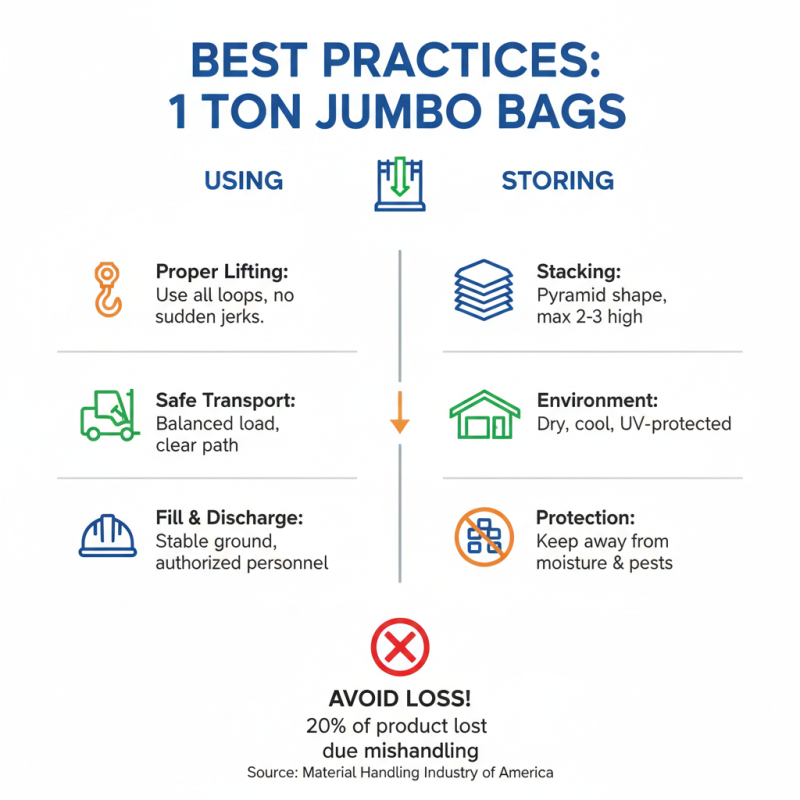
When using and storing 1 ton jumbo bags, proper practices ensure maximum efficiency and safety. According to the Material Handling Industry of America, improper handling can lead to significant product loss and accidents. For instance, poorly stored bags can become damaged, leading to contamination. The industry estimates that nearly 20% of products are lost due to mishandling and inadequate storage conditions.
To maintain the integrity of jumbo bags, consider temperature and humidity levels in storage areas. Ideal conditions are dry and cool. Extreme weather can degrade the bag material. Regular inspections are essential. Look for signs of wear, such as fraying or punctures. Industry reports indicate that proactive inspections can prevent up to 30% of bag failures.
Employing proper stacking methods is another key aspect. Bags should be stacked in a stable manner to prevent collapses. A height exceeding four bags increases the risk of toppling. Staff training plays a crucial role too. Ensuring that employees understand best practices can minimize accidents. Reports suggest that organized training reduces workplace incidents by nearly 40%. By focusing on these practices, suppliers can maximize the life and utility of their jumbo bags.