
In today's competitive market, 321 Stainless Steel stands out as a preferred material due to its unique properties. This nickel-chromium stainless steel offers excellent resistance to corrosion, high temperatures, and oxidation. According to a recent industry report by the Global Stainless Steel Alliance, the demand for 321 Stainless Steel has grown by over 15% in the past five years.
Manufacturers use 321 Stainless Steel in various applications, including aerospace, automotive, and chemical processing. This material's ability to withstand harsh environments makes it an ideal choice. However, some industries still overlook its potential. The lack of awareness limits widespread adoption despite its advantages. Furthermore, sourcing quality 321 Stainless Steel can be challenging.
The development and refinement of 321 Stainless Steel continue, but buyers must consider several factors. Selecting the right suppliers and understanding material specifications is crucial. Price fluctuations and market dynamics can also affect purchasing decisions. As the demand increases, manufacturers must address these issues to fully harness the potential of 321 Stainless Steel.
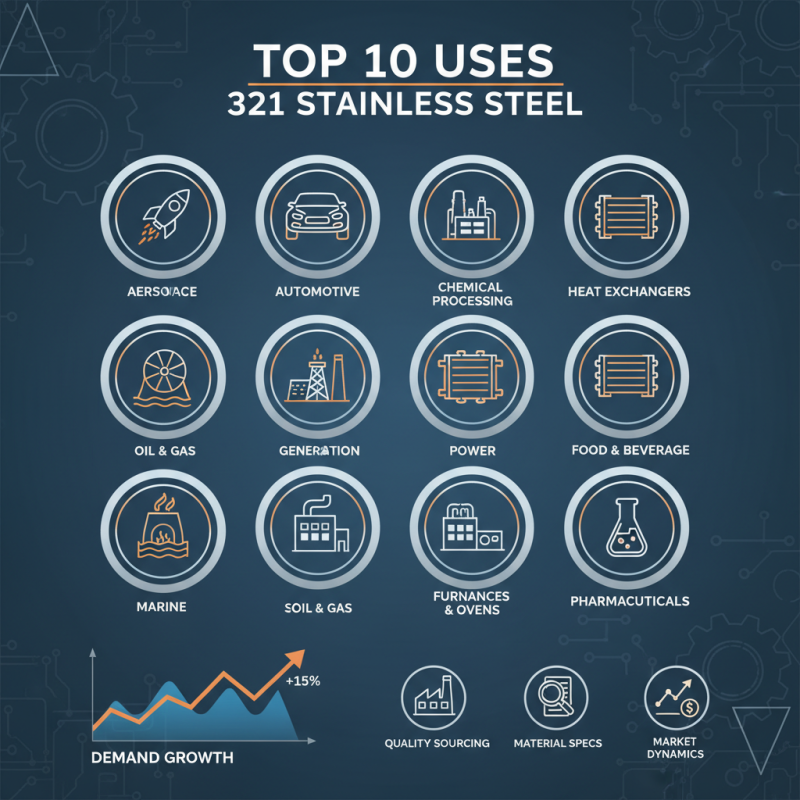
321 stainless steel is known for its unique properties. This alloy contains titanium, which enhances its resistance to corrosion and oxidation. It is especially effective in high-temperature environments, making it a favorite in various industries.
The mechanical properties of 321 stainless steel are impressive. It maintains strength and durability in demanding conditions. A report by the International Stainless Steel Forum shows that this alloy performs well up to 1,700°F (927°C), proving its reliability in environments where other materials fail.
Tips: Consider your specific application needs. For high-temperature applications, 321's titanium content is essential. Assessing environmental conditions in advance can prevent costly failures.
However, challenges do exist. The cost of 321 stainless steel can be higher than other alloys. Buyers must weigh the benefits against the investment. Depending on the application, choosing a less expensive material might be tempting. Yet, this choice could lead to higher maintenance costs later.
Using 321 stainless steel offers significant advantages, but improper application can negate these benefits. Regularly consult with material specialists to ensure optimal usage for your projects.
321 stainless steel is a popular choice in various industries due to its excellent properties. One of the primary sectors utilizing this alloy is aerospace. Its high resistance to oxidation makes it ideal for parts exposed to extreme temperatures. Components like turbine exhaust manifolds often rely on 321 stainless steel for durability and performance.
The chemical processing industry also heavily utilizes 321 stainless steel. Its ability to withstand corrosive environments is crucial for storing and transporting chemicals. Tanks and piping systems crafted from this alloy ensure safety and longevity. However, not every application is flawless. Some users experience issues with weldability in specific configurations.
Another significant sector is the oil and gas industry. Equipment used in extraction and refining processes often needs high heat resistance. 321 stainless steel meets that requirement effectively. Yet, some components face challenges with stress corrosion cracking. Continuous improvement and research are necessary to overcome such obstacles and maximize performance.
321 stainless steel is widely recognized in aerospace and automotive sectors due to its exceptional properties. This alloy offers high corrosion resistance and maintains strength at elevated temperatures. Aircraft components often rely on this material for safety and durability. For example, it is used in exhaust systems and fuel lines where heat and corrosion are prevalent.
In the automotive industry, 321 stainless steel is valued for exhaust systems and structural components. It’s lightweight yet strong, contributing to fuel efficiency and performance. The alloy’s resistance to oxidation ensures longevity, reducing maintenance costs over time. However, not all applications may benefit from its specific properties. Buyers must evaluate their needs carefully before use.
Tips: When considering 321 stainless steel, assess the operating temperatures and environmental conditions of your project. Always consult with a materials expert. Proper welding techniques are crucial for optimizing the alloy's performance. Making informed decisions can lead to better outcomes.
In the chemical and oil industries, 321 stainless steel is widely recognized for its exceptional performance. Its resistance to corrosion and heat makes it ideal for high-temperature environments. This grade includes titanium, which stabilizes the material against sensitization. According to industry reports, 321 stainless steel shows superior performance in corrosive environments, especially when blended media are present.
A recent study indicates that the demand for 321 stainless steel in chemical processing has increased by 25% in the last five years. This growth reflects an industry shift toward durability and resilience. The material is often used in applications such as heat exchangers, reactor vessels, and pipelines. These components frequently face challenging conditions, including harsh chemicals and elevated temperatures.
Despite its advantages, challenges remain. The welding of 321 stainless steel can be tricky, requiring expert knowledge. Improper welding techniques may lead to unacceptable microstructural changes. Such issues can potentially compromise the integrity of critical components. Ongoing research focuses on improving welding methods to enhance reliability further.
The landscape of 321 stainless steel applications is evolving rapidly. This alloy is known for its excellent resistance to corrosion and heat. Industries are exploring new ways to utilize its properties. For instance, in aerospace, the demand for lightweight yet durable materials is growing. Engineers are innovating with 321 stainless steel in turbine components and exhaust systems. This evolution showcases its versatility and strengths in demanding environments.
In the construction sector, the focus is shifting toward sustainable materials. 321 stainless steel is often chosen for its longevity and recyclability. It is being used in architectural designs and structural frameworks. However, some challenges remain. The cost of production can be higher than other materials. This requires careful consideration in budget planning. Additionally, not all suppliers may maintain consistent quality standards. These factors highlight the need for due diligence when selecting materials.
Emerging technologies also hint at future trends. 3D printing with 321 stainless steel could revolutionize manufacturing processes. This method allows for customization and reduces waste. Yet, the industry must address the technical hurdles involved in ensuring quality. As advancements continue, the true potential of 321 stainless steel in various applications is only beginning to unfold.
| Application | Description | Key Benefits | Future Trends |
|---|---|---|---|
| Aerospace Components | Used in various aircraft parts due to high-temperature resistance. | Excellent oxidation resistance, lightweight, and strength. | Increasing use in next-gen aircraft designs. |
| Chemical Processing | Components in reactors, columns, and heat exchangers. | High resistance to corrosive environments. | Growing adoption in green chemistry applications. |
| Oil and Gas Industry | Used in pipelines and valves under harsh conditions. | Durable and resistant to high temperatures and chemicals. | Innovation in deep-sea extraction technologies. |
| Nuclear Reactors | Material for reactor vessels and piping systems. | Radiation resistance and durability. | Increased safety measures leading to better materials. |
| Automotive Exhaust Systems | Components that withstand extreme temperatures. | Long life and resistance to corrosion. | Shift towards electric vehicles impacting material choices. |
| Marine Applications | Components for ships and offshore platforms. | Resistance to saltwater corrosion. | Emerging technologies for sustainable boating practices. |
| Pharmaceutical Equipment | Used in production and storage of medicines. | High sanitary standards and corrosion resistance. | Rise of biopharmaceuticals driving innovation. |
| Architectural Applications | Used in building facades and structural components. | Aesthetic appeal with high durability. | Increased focus on sustainable building materials. |
| Food Processing Industry | Production equipment and storage tanks. | Meets hygiene standards, resistant to acids. | Focus on increasing food safety regulations. |
| Energy Sector | Used in power plants and renewable energy systems. | High resistance to various conditions enhancing longevity. | Investment in renewable energy driving material choices. |
Copyright 2025 © Custom Packaging Products | All Rights Reserved