
Buying sustainable packaging is no longer a cosmetic trend. It is a practical sourcing decision.
The OECD Global Plastics Outlook reports that only 9% of global plastic waste was recycled in 2019. Cosmetic packaging adds complexity, because pumps, caps, coatings, and mixed materials can limit recycling. This makes Eco-Friendly Cosmetic Containers Wholesale a careful evaluation process, not a simple search for “green” bottles. Buyers must examine material composition, recycled content, refill potential, supplier documentation, and end-of-life options.
Small details matter. A thick glass jar may feel premium, yet its transport weight can increase emissions. A lightweight plastic bottle may perform better, but only if its resin is recyclable in the target market. The choice is not always obvious. Ellen MacArthur, founder of the Ellen MacArthur Foundation, has stated, “We need to rethink the way we design, use, and reuse plastics.” Her principle is highly relevant to cosmetic packaging procurement.
This guide will examine wholesale container materials, supplier verification, minimum order quantities, customization, testing, and realistic sustainability claims. It will also consider PCR plastic, aluminum, glass, biodegradable materials, and refill systems. Certifications can help, but they do not replace evidence. Buyers should request technical data sheets, recycled-content declarations, product samples, and packaging compatibility tests.
Cost still matters. So does failure.
A leaking pump, unstable closure, or misleading environmental claim can damage both margins and trust. Sustainable packaging should look responsible, perform reliably, and fit local recycling systems. That standard is demanding, but it is more credible than choosing packaging based only on appearance.
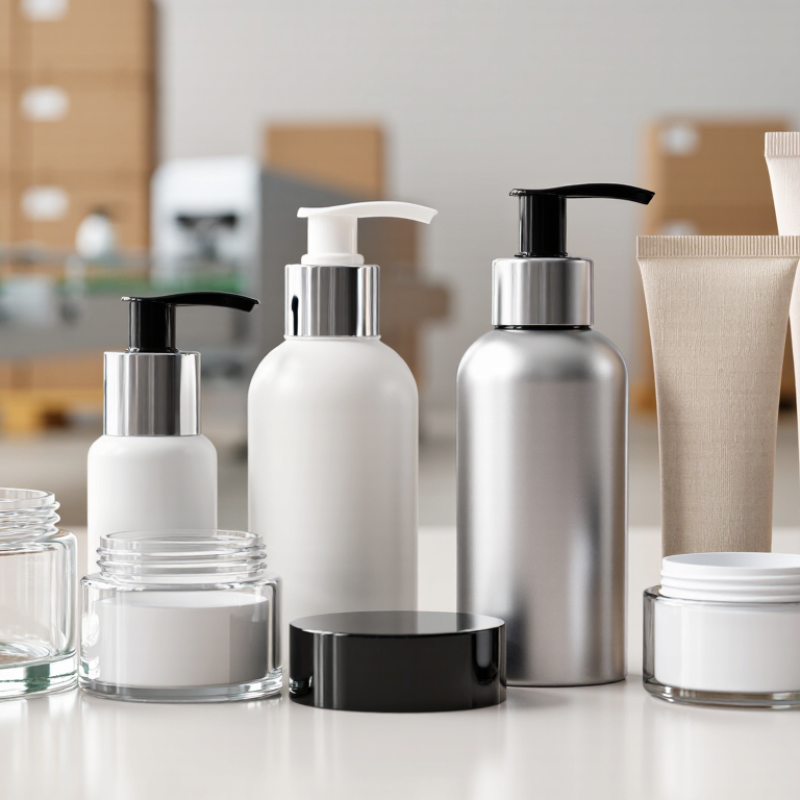
How to Buy Eco Friendly Cosmetic Containers Wholesale 2026
Define Your Eco-Friendly Cosmetic Container Requirements
Start with the formula, not the appearance. Record viscosity, pH, essential oils, alcohol content, filling temperature, and expected shelf life. These details determine whether you need glass, aluminum, recycled plastic, or a refillable system. Request compatibility testing with the actual formula. A beautiful container can still leak, crack, or absorb fragrance.
Set measurable sustainability requirements. Specify post-consumer recycled content, material weight, recycled content percentage, and separation of pumps, lids, and bottles. The OECD’s Global Plastics Outlook reports that packaging represents about 40% of global plastic waste. Reducing unnecessary components therefore matters. However, lighter packaging is not always greener. A thin container that fails during transport creates avoidable waste. That trade-off deserves testing.
Define end-of-life instructions for your target market. “Recyclable” depends on local collection systems, sorting technology, and material separation. The 2023 Global Buying Green Report found that 82% of surveyed consumers were willing to pay more for sustainable packaging. Their expectations are rising, but vague claims can weaken trust. Ask suppliers for material declarations, migration or compatibility records, recycled-content evidence, and relevant third-party certifications. Confirm minimum order quantities, lead times, mold ownership, and defect tolerances before approval. Small details matter. I would also challenge my first specification: an ambitious material choice may increase cost, breakage, or emissions. A practical requirement should survive real filling, shipping, use, and disposal conditions.
Sustainable packaging starts with material performance, not appearance. Glass offers strong chemical resistance and a premium feel. However, it is heavy and can break during shipping. Aluminum is lighter, durable, and highly recyclable, but producing new aluminum requires substantial energy. Post-consumer recycled plastic reduces virgin resin demand, although color, odor, and consistency can vary between batches. That variation is inconvenient, but ignoring it creates bigger problems during filling.
The OECD’s Global Plastics Outlook reports that packaging creates about 40% of global plastic waste. The Ellen MacArthur Foundation also reported that only 9% of plastic waste was recycled globally. These figures make material selection urgent. Still, “recyclable” does not guarantee actual recycling. Pumps, multilayer tubes, dark pigments, and glued labels may reduce recovery performance. Choose mono-material designs where possible, with removable components and clear resin identification. Test seal strength, leakage, drop resistance, and formula compatibility before ordering large quantities. A beautiful container that leaks is not sustainable.
Tips: Request samples from at least three suppliers. Compare wall thickness, closure torque, recycled content, and shipping damage. Ask for documented material claims, not vague green language. Check whether the container protects light-sensitive formulas. My practical mistake was trusting a recycled-content percentage without checking batch consistency. Sustainability needs evidence, but real-world performance still deserves equal attention.
How to Buy Eco Friendly Cosmetic Containers Wholesale 2026
Buying eco friendly cosmetic containers wholesale requires more than checking a green label. Ask each supplier for current certification documents, factory details, and material percentages. Useful evidence may include recycled-content certificates, safety test reports, and responsible forestry documents for paper-based packaging. Verify the issuing organization independently. A polished PDF can still be outdated.
Request a physical sample before placing a large order. Inspect the pump, cap, seal, and surface finish. Test the container with your actual formula for several weeks. Check leakage, discoloration, odor, and compatibility. Ask whether the material is recyclable in your target market. “Biodegradable” claims need careful review because local facilities may not process them. I once trusted a material description that sounded sustainable, but the supplier could not show its full composition. That was a useful warning.
Tips: Confirm factory ownership and production capacity. Request a recent social compliance audit, worker safety records, and wastewater procedures. Ask who supplies the recycled resin and whether its origin is traceable. Compare minimum order quantities, tooling fees, lead times, and replacement policies. Ethical sourcing also includes clear contracts and realistic payment terms. If a supplier refuses reasonable questions, pause the order. A cheaper container may create higher waste, delays, or reputational risk. Keep every certificate, test result, and inspection photo in one dated file. Recheck them before each major purchase.
EU packaging recycling targets provide a practical reference when comparing wholesale suppliers. Ask for material specifications, chain-of-custody documentation, recycled-content evidence, factory audit records, and certificates such as GRS, RCS, FSC, ISO 14001, or recognized social-compliance audits.
Reference data: EU packaging recycling targets for 2025 and 2030 under Directive 94/62/EC and related amendments. These targets are regulatory benchmarks, not supplier certification results. Verify current legal applicability for the destination market before placing an order.
Buying eco-friendly cosmetic containers wholesale in 2026 starts with a practical cost check. Request a tiered quote for containers, closures, labels, and tooling. “Cheap” can hide setup fees. Compare the landed cost, not only the factory price. Ask whether recycled content, refill systems, or bio-based materials change the price. Clear specifications prevent expensive surprises.
Minimum orders may differ for bottles, jars, pumps, and printed components. Ask for separate MOQs for every part. A low MOQ may carry a higher unit price. That trade-off can protect cash flow for a new product. Order physical samples before approving production. Check thread fit, leakage, color consistency, weight, and drop resistance. Test filled samples for several weeks. This takes time. It is safer. Request material declarations and relevant test reports. Do not treat marketing claims as proof.
Shipping terms need written detail. Confirm Incoterms, delivery points, carton dimensions, pallet rules, insurance, and import responsibilities. Ask for production lead times and a realistic inspection buffer. Sea freight may reduce unit costs but delay inventory. Air freight is faster. Margins can suffer. Calculate duties and local taxes with a qualified broker. Sample orders may include separate courier charges. Keep approved samples and signed specifications as references. Even careful forecasts can miss seasonal delays.
Choosing eco-friendly cosmetic containers wholesale requires more than selecting a material labeled “green.” I recommend requesting physical samples before placing a large order. Check the bottle weight, cap fit, pump performance, surface finish, and resistance to oils or alcohol-based formulas. Small defects become expensive when thousands of units arrive.
Prepare a clear purchase sheet with container size, material percentage, color reference, decoration method, minimum order quantity, and target delivery date. Ask the supplier for recycled-content evidence, material specifications, and relevant quality documents. Confirm whether the container suits cosmetic contact and meets the rules in your selling markets. Requirements can differ by region. Do not rely on verbal promises.
Keep communication practical. Approve a signed sample, confirm carton dimensions, and request photos before shipment. A staged order may reduce risk when testing a new container design. However, smaller quantities can increase unit costs and packaging waste. That trade-off deserves honest review. I have seen attractive sustainable options fail because the closure leaked during transport. Build a small stress test into your approval process. Test filled units after heat, cold, and several days of handling. Record results and share them with the supplier. Leave extra time for production changes, inspections, and customs delays. Sustainable ordering is not perfect, but careful records make each decision more reliable.
| Container Type | Common Material | Typical Capacity | Indicative Wholesale Price* | Typical MOQ | Standard Lead Time | Best Sustainability Attribute | Important Documents to Request | Order Management Checkpoint |
|---|---|---|---|---|---|---|---|---|
| Cosmetic Jar | Post-consumer recycled PET, glass, or polypropylene | 15–100 ml | US$0.18–US$1.20 per unit | 1,000–10,000 units | 25–60 days after artwork approval | Reusable and widely available | Material specification, recycled-content statement, migration test, and packaging specification | Confirm jar, lid, liner, and spatula compatibility before mass production |
| Airless Pump Bottle | Recycled polypropylene, polyethylene, or mixed plastic construction | 15–100 ml | US$0.35–US$1.80 per unit | 2,000–10,000 units | 35–70 days after sample approval | Helps reduce product waste | Component material declaration, pump performance test, compatibility test, and recycled-content evidence | Run dosage, leakage, vacuum, and actuation tests with the actual formula |
| Dropper Bottle | Glass bottle with polypropylene cap and elastomer bulb | 10–50 ml | US$0.30–US$1.50 per unit | 1,000–5,000 units | 30–60 days after final specification | Glass is highly recyclable | Glass composition, closure specification, leak test, and formula compatibility report | Check dropper dosage consistency and cap sealing during transport simulation |
| Foaming Pump Bottle | Recycled PET or polypropylene | 100–250 ml | US$0.45–US$1.60 per unit | 2,000–10,000 units | 35–65 days after sample confirmation | Can support diluted formulas | Pump output test, material declaration, leak test, and compatibility documentation | Verify foam quality, output per stroke, and performance after repeated use |
| Tube | Mono-material polyethylene or paper-plastic laminate | 15–200 ml | US$0.12–US$0.75 per unit | 5,000–20,000 units | 30–75 days after artwork approval | Mono-material designs simplify recycling | Tube structure, cap material, seal integrity test, ink specification, and recyclability guidance | Approve print color, shoulder shape, cap fit, and burst resistance before production |
| Refill Pouch | Recyclable polyethylene where accepted by local collection systems | 100–1,000 ml | US$0.15–US$0.90 per unit | 3,000–20,000 units | 35–80 days after artwork and filling tests | Uses less packaging material | Film structure, seal-strength test, barrier data, food-contact status where relevant, and recycling instructions | Confirm filling equipment, spout fit, shelf-life requirements, and transport durability |
| Aluminum Tin | Aluminum with protective internal coating | 15–250 ml | US$0.25–US$1.40 per unit | 1,000–10,000 units | 30–65 days after artwork approval | Permanently recyclable material | Aluminum grade, coating specification, corrosion test, and formula compatibility report | Test dent resistance, lid fit, coating integrity, and reaction with oil-based formulas |
| Refillable Compact | Recycled plastic, aluminum, or glass with replaceable pan | 2–15 g product fill | US$0.70–US$3.50 per unit | 1,000–5,000 units | 45–90 days for custom tooling or inserts | Designed for repeated use | Material declaration, hinge-cycle test, magnet specification, and refill-component compatibility data | Approve refill dimensions, closure strength, hinge durability, and user replacement process |
*Price ranges are indicative planning estimates in U.S. dollars for standard empty containers and may vary by material grade, decoration, tooling, quantity, testing, shipping method, duties, and destination. Always obtain a written quotation and production sample before placing a wholesale order.
Copyright 2025 © Custom Packaging Products | All Rights Reserved