Why Choose Biodegradable Packaging Bags for a Sustainable Future?
As the world increasingly grapples with plastic pollution, the need for biodegradable packaging bags has never been more critical. In 2020, the global biodegradable packaging market was valued at approximately $5 billion and is expected to grow at a CAGR of 11% by 2027. This rapid growth indicates a significant shift towards sustainable practices, driven by consumer demand and regulatory changes.
Dr. Emily Rivers, a leading expert in sustainable packaging, states, “The future lies in our ability to innovate and commit to eco-friendly options like biodegradable packaging bags.” These products not only reduce landfill waste but also promote a circular economy by breaking down naturally. Yet, despite their benefits, some challenges remain in terms of consumer awareness and the need for proper waste management systems.
Incorporating biodegradable options requires reflection and adaptation. Companies must consider their entire supply chain when implementing these alternatives. While biodegradable packaging bags showcase promise for a sustainable future, there is still much to explore regarding their production and disposal methods. The journey towards sustainability is ongoing, filled with both challenges and opportunities.
The Environmental Impact of Traditional Packaging Materials
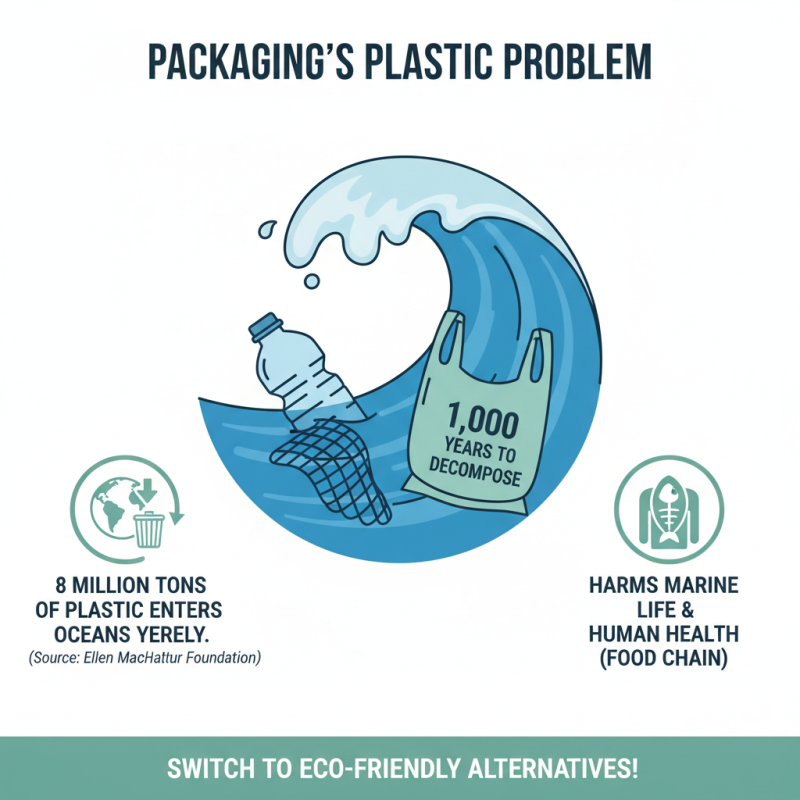
Traditional packaging materials have a significant environmental impact. Plastic bags alone can take up to 1,000 years to decompose. This long lifespan contributes to widespread pollution in oceans and landscapes. According to a report by the Ellen MacArthur Foundation, about 8 million tons of plastic waste enter the oceans each year. This not only harms marine life but also affects human health through the food chain.
Moreover, traditional packaging is resource-intensive. A study from the World Economic Forum reveals that packaging accounts for 26% of global plastic consumption. This demand leads to increased fossil fuel extraction and greenhouse gas emissions. The production of plastic packaging alone releases around 1.8 billion tons of CO2 annually. It's a wake-up call for industries to reconsider their choices.
Not all forms of packaging are equal. Sustainable alternatives, like biodegradable bags, present a positive shift. These products break down naturally, reducing landfill waste. They require fewer resources and can even be made from renewable materials. Yet, industries must address the challenge of consumer education. Many people still view traditional packaging as more convenient. Reflection is needed on how to balance convenience with environmental responsibility. Finding a sustainable route is not just an option; it is a necessity.
Statistical Overview of Plastic Waste and Its Consequences
Plastic waste has reached alarming levels globally. According to the United Nations, about 300 million tons of plastic are produced every year. A significant portion of this ends up in landfills and oceans. It is estimated that by 2050, there will be more plastic than fish in the sea. This statistic underlines the urgent need for change.
The impact of plastic waste is profound. Marine animals ingest plastic, mistaking it for food. Ingesting plastic can lead to injury or death. Additionally, microplastics have infiltrated our food chain. Studies show that humans consume about 5 grams of plastic per week—a weight comparable to a credit card. The consequences are severe, including potential health risks that are still being researched.
Transitioning to biodegradable packaging is a step toward sustainability. Biodegradable bags decompose more quickly than plastic. They break down into natural elements within months under proper conditions. This transition may seem small, but collectively, it can reduce plastic pollution significantly. Reflecting on these facts, one must consider the impact of personal choices. What will we leave for future generations?
Why Choose Biodegradable Packaging Bags for a Sustainable Future? - Statistical Overview of Plastic Waste and Its Consequences
| Type of Waste |
Annual Production (Million Tons) |
Percentage of Plastic in Landfills (%) |
Expected Decomposition Time (Years) |
| Plastic Bags |
4.2 |
30% |
300 |
| Food Packaging |
5.0 |
35% |
1000 |
| Beverage Containers |
3.7 |
25% |
450 |
| Industrial Plastics |
6.5 |
20% |
500 |
| Other Plastics |
2.0 |
10% |
200 |
Benefits of Biodegradable Materials in Reducing Carbon Footprint
Biodegradable packaging bags play a crucial role in reducing our carbon footprint. According to a report by the Environmental Protection Agency, traditional plastic bags take up to 1,000 years to decompose. In contrast, biodegradable bags can break down in months, significantly reducing landfill waste.
Choosing biodegradable materials cuts carbon emissions. A study from the Journal of Cleaner Production found that using biodegradable options can reduce greenhouse gas emissions by up to 70%. This change is vital as carbon emissions contribute to climate change. Many biodegradable materials are made from renewable resources, further minimizing the reliance on fossil fuels.
Yet, the transition to biodegradable packaging is not without challenges. Not all biodegradable bags break down in typical environmental conditions. Some require industrial composting facilities, which are not universally available. Furthermore, the production of these materials can still involve higher energy consumption compared to traditional plastics. These factors remind us that while biodegradable solutions are promising, we must address their limitations for a truly sustainable future.
Impact of Biodegradable Packaging on Carbon Footprint Reduction
Biodegradable packaging bags significantly reduce the carbon footprint compared to traditional plastic bags. This chart illustrates the carbon footprint of three types of packaging, highlighting the environmental benefits of using biodegradable materials for a sustainable future.
Market Trends: Growth of Biodegradable Packaging in Consumer Goods
The consumer goods market is experiencing a significant shift towards biodegradable packaging. According to a recent study, the biodegradable packaging market is projected to grow at a CAGR of over 14% between 2021 and 2028. This trend reflects a growing awareness of environmental issues and a demand for sustainable packaging solutions.
More consumers are now seeking eco-friendly products. Approximately 73% of Millennials prefer buying from brands that focus on sustainability. This shift is reshaping market dynamics, with businesses adapting to meet customer expectations. However, not all biodegradable options are created equal. Some may still leave a footprint due to manufacturing processes.
Tips: Consider the type of material used in biodegradable packaging. Look for options that break down quickly and safely. Also, check certifications to ensure the products meet environmental standards. Understanding the lifecycle of this packaging can help consumers make informed choices.
Incorporating biodegradable bags can enhance a brand’s image. Yet, companies might face challenges in sourcing reliable materials. Balancing cost and sustainability is essential for long-term success. The journey to a greener future may have hurdles, but consumer demand is pushing brands to innovate.
Regulatory Initiatives Supporting Biodegradable Packaging Adoption
Regulatory initiatives are increasingly supporting the shift towards biodegradable packaging. Governments worldwide are implementing stricter regulations on plastic usage. These rules push businesses to adopt sustainable alternatives. The European Union has set ambitious targets for reducing plastic waste. Many countries are following suit, aiming for cleaner environments.
Policies encouraging biodegradable options help raise public awareness. Consumers are becoming more conscious of their choices. This cultural shift reflects a growing demand for eco-friendly products. Yet, challenges remain. Not all biodegradable materials break down effectively. Some still contribute to pollution if not properly disposed of. This gap highlights the need for better education on waste management.
Innovative legislation is emerging to address these concerns. Incentives for companies that use biodegradable materials are becoming more common. However, the effectiveness of these policies varies. Some regions struggle with enforcement. Finding balance in regulation is essential. The transition to biodegradable packaging is a complex journey. It requires collaboration between businesses, governments, and consumers.