
Choosing the right Retail Paper Bags involves more than selecting a pleasant color or attractive logo. A strong bag must carry products safely, support brand identity, and suit real customer habits. Size, paper weight, handle design, moisture resistance, and printing quality all affect performance. A thin bag may reduce material use, yet it can fail beside a wet sidewalk or overloaded checkout counter.
Industry evidence supports careful material decisions. The U.S. Environmental Protection Agency reported that paper and paperboard containers and packaging achieved a 49.1% recovery rate in 2018. This figure shows paper’s established recovery infrastructure, although recycling results vary by region and contamination levels. Smithers’ paper packaging market research also highlights continued demand for fiber-based formats, driven by sustainability goals and changing consumer expectations. The report does not make paper automatically superior. Design still matters.
A practical selection process should compare recycled content, certified fiber sources, load capacity, and end-of-life instructions. FSC certification can support responsible forestry claims, while recognized recyclability guidance helps avoid misleading environmental messages. Ask suppliers for test data, not vague promises. Test each bag with actual products, including glass jars, boxed cosmetics, or takeaway containers. Watch the handles. Check the base. Notice how the bag feels after ten minutes in a customer’s hand.
No bag is perfect.
Retailers should balance durability, appearance, cost, and responsible sourcing. A premium bag that tears creates waste and damages trust. A basic bag that performs consistently may create greater value. The best choice is evidence-led, measured, and open to improvement.
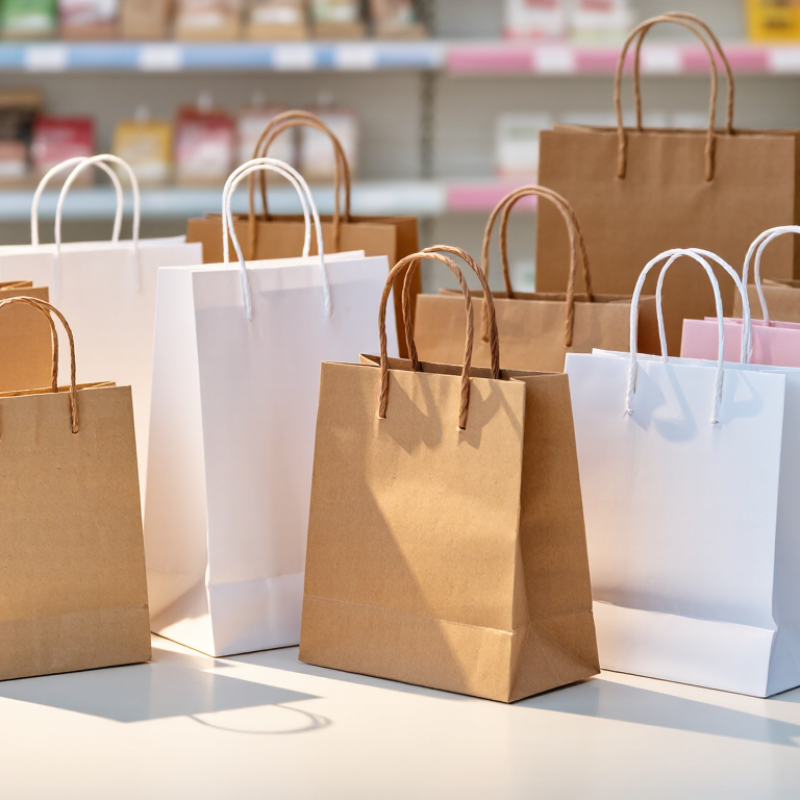
Choosing a retail paper bag starts with the shopping task, not the artwork. A customer buying shoes needs stronger handles and a wider base. A customer carrying lightweight clothing may need less material. Measure product weight, shape, moisture exposure, and carrying distance before selecting paper grade. Small details matter. A wet sidewalk can defeat a beautiful bag.
Performance should be tested under realistic conditions. Check handle attachment, seam strength, base stability, and stacking behavior. Ask suppliers for load testing data, not only attractive samples.
The U.S. Environmental Protection Agency reported 67.4 million tons of paper and paperboard packaging generated in 2018, with 46.9 million tons recycled. Material efficiency therefore deserves attention. A thicker bag is not automatically a better bag. Sometimes, it is simply wasteful.
Recycled content, fiber sourcing, and recyclability should match local collection systems. The Confederation of European Paper Industries reported an approximately 80% paper recycling rate in Europe in 2022, showing strong recovery potential, but infrastructure differs by region. Consider printed coverage, coatings, and metalized elements carefully. They may affect sorting and recycling.
One practical mistake is testing bags only indoors. Retail conditions are messier. Test them with real products, real weights, and slightly uncomfortable weather. Perfect specifications rarely survive reality.
Choosing the best retail paper bag starts with paper grade, not appearance. Kraft paper offers strong tear resistance and a natural texture. Recycled paper can reduce virgin fiber demand, but its fibers may be shorter. That difference affects handle strength and bottom stability.
A heavier bag is not automatically better. Practical sampling should test basis weight, moisture exposure, seam strength, and filled-bag performance.
Size must match the product, including its height, width, and gusset depth. A narrow bag may crease around boxed items. An oversized bag wastes material and looks unstable at checkout.
Flat handles suit lighter merchandise and stack efficiently.
Twisted paper handles feel more comfortable for heavier purchases.
Reinforced handle patches improve durability, especially near the fold. Pasted bottoms suit general retail use, while folded or block bottoms provide better standing support.
Construction matters more than decoration.
According to the U.S. Environmental Protection Agency’s 2018 Facts and Figures report, paper and paperboard had a 68.2% recycling rate in the United States.
That figure supports paper’s recovery potential, but actual results depend on local collection systems and contamination. Two Sides’ 2023 Trend Tracker also found that 79% of surveyed consumers viewed paper and cardboard packaging as environmentally preferable.
Consumer preference is useful evidence, not a complete specification. I would still request supplier test data, check recycled-content documentation, and trial the bag with real products.
Small failures appear quickly. A torn handle can outweigh attractive printing.
A retail paper bag should carry more than a product. It should carry the customer’s impression. In packaging projects, I have found that simple branding often feels more trustworthy than crowded artwork. Use one clear logo, two supporting colors, and readable type. The handle should feel comfortable, not sharp against the fingers. Small details matter.
Appearance & Durability Appearance needs to match the product and the shopping setting. A matte surface can suggest calm quality, while a brighter finish creates more energy. Choose paper thickness based on product weight, not appearance alone. A beautiful bag that tears near the parking lot becomes a negative memory. Test filled bags by lifting, carrying, and placing them down repeatedly. Do not trust a sample that only looks good on a table.
Customer Experience Customer experience also depends on sound, texture, and convenience. Handles should remain secure after several uses. The opening should stay wide enough for quick packing. If customers reuse the bag, clean artwork and durable paper become valuable advertising. That assumption can be wrong, though. Some shoppers may prefer less visible branding. A useful design review should include staff and real customers, not only marketing teams. Ask whether the bag feels easy to hold, easy to store, and suitable for public use. Record the weak points honestly. Our first sample looked polished but folded badly in narrow lockers. That mistake changed the final dimensions.
How to Choose the Best Retail Paper Bags?
A sustainable paper bag needs more than a green-looking label. Check the paper source, recycled content, coating, ink, handles, and adhesive. Ask suppliers for current documentation, not vague environmental promises. Forest certification can support responsible sourcing, but it does not prove the entire bag is recyclable. A bag with a plastic film window may require different processing. A water-resistant coating can also change its end-of-life route. Small details matter.
Compliance should be checked for the bag’s intended use and sales region. Request test reports for strength, chemical safety, and food-contact suitability when relevant. Confirm that claims follow applicable packaging and advertising rules. Requirements can differ between countries, cities, and waste systems. Do not rely on a certificate copied into a sales brochure. Verify its scope, date, and issuing body.
Think about the final disposal stage before placing a large order. Can local facilities accept the bag? Are wet or grease-stained bags rejected? Can customers remove labels, cords, or mixed-material parts easily? A plain paper bag may perform better than a highly engineered alternative. Yet paper is not automatically the best choice in every situation. It may need more material for heavy products. That trade-off deserves honest review. Choose a bag that matches product weight, expected reuse, local recycling access, and verified environmental evidence.
Balance Unit Cost, Supplier Reliability, and Order Flexibility
A low unit price can be misleading. Check the complete landed cost, including paper weight, handles, printing, cartons, freight, and rejected bags. A useful comparison uses the same size, material grade, and delivery terms. At the receiving dock, inspect crushed corners, uneven folds, weak handles, and color differences. Small defects become expensive when staff replace bags during busy hours.
Supplier reliability deserves equal attention. Ask for a production sample, written specifications, and a realistic lead-time range. Confirm how the supplier manages material shortages, quality checks, and urgent reorders. A responsive contact matters when a shipment arrives late. Do not rely on promises alone. Review recent delivery records and request a clear corrective-action process. One missed seasonal shipment can cost more than a slightly higher unit price.
Order flexibility protects cash flow. Favor suppliers that offer sensible minimum quantities, mixed-size orders, and repeat production with consistent dimensions. Flexible terms help when sales forecasts change or a new store opens unexpectedly. However, flexibility may increase the price per bag. That trade-off requires calculation. I might choose a cheaper quote too quickly. That is a purchasing mistake worth reviewing. A simple scorecard can compare cost, defect risk, lead time, communication, and reorder options. The best paper bag is not merely inexpensive. It supports dependable daily operations without trapping the business in excessive inventory.
Copyright 2025 © Custom Packaging Products | All Rights Reserved