Top Tips for Choosing the Best Forklift Bags for Your Business Needs
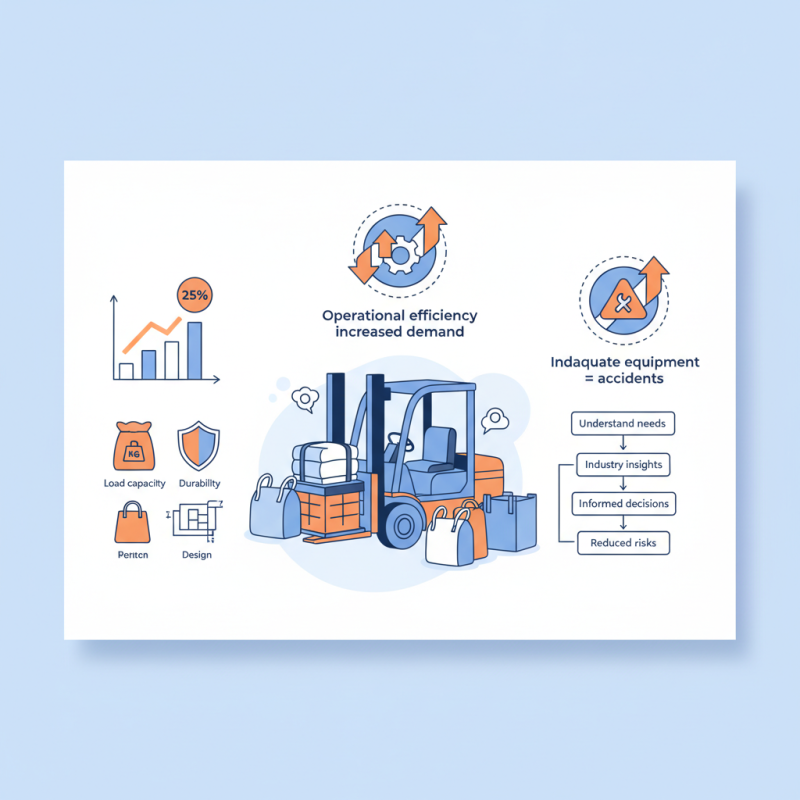
In today's fast-paced industrial environment, effective material handling is crucial for operational efficiency. One essential component in this process is the use of forklift bags, designed to enhance storage capacity and streamline the management of goods. According to a report by the Material Handling Industry of America, the demand for effective material handling solutions has increased by over 25% in recent years, reflecting the growing importance of proper storage and logistics in businesses across various sectors.
When selecting the best forklift bags, it is essential to consider factors such as load capacity, durability, and design, as these elements directly impact productivity and safety in the workplace. A study released by the Occupational Safety and Health Administration highlighted that inadequate lifting equipment contributes to significant workplace accidents, underscoring the necessity of well-designed forklift accessories. By understanding the specific needs of their operations and leveraging industry insights, businesses can make informed decisions when it comes to choosing the right forklift bags, ultimately improving efficiency and reducing operational risks.
Understanding the Different Types of Forklift Bags Available
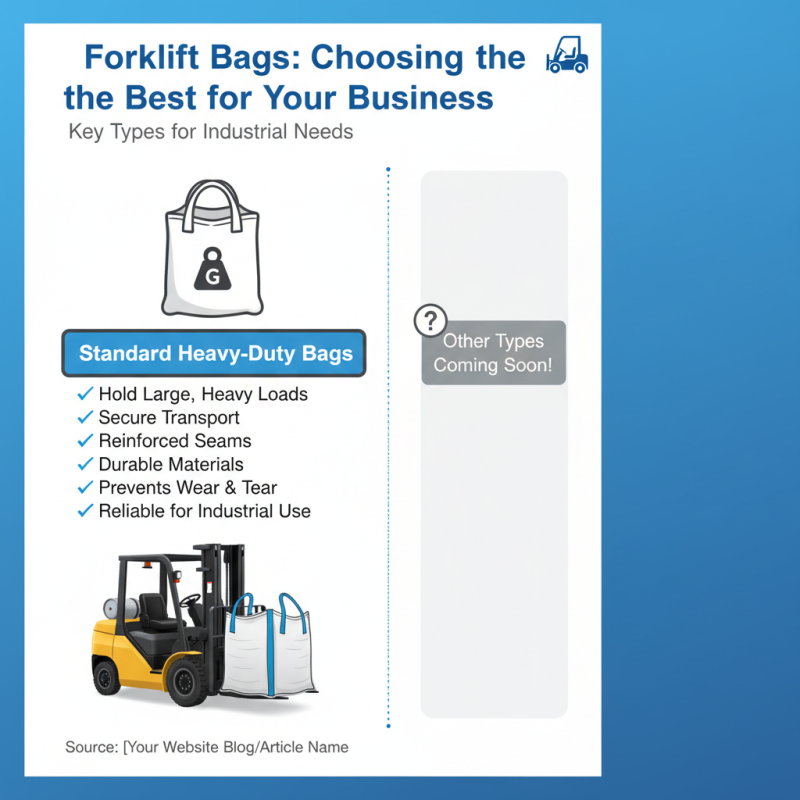
When choosing the best forklift bags for your business needs, it is essential to understand the different types of forklift bags available on the market. The most common types include standard heavy-duty bags, which are designed to hold large, heavy loads securely during transport. These bags often feature reinforced seams and durable materials to prevent wear and tear, making them ideal for industrial environments where reliability is crucial.
Another popular option is the collapsible forklift bag. These bags are highly versatile and can be easily folded when not in use, saving valuable space in your warehouse or storage area. Collapsible bags are perfect for businesses that require flexibility, allowing them to adapt to varying load sizes and storage requirements. Additionally, specialized bags such as bulk bags or sack-type variants cater to specific industries, providing solutions for unique operational demands. Understanding the available options will help you make an informed decision that best suits your business's material handling needs.
Evaluating Material Durability and Weight Capacity for Forklift Bags
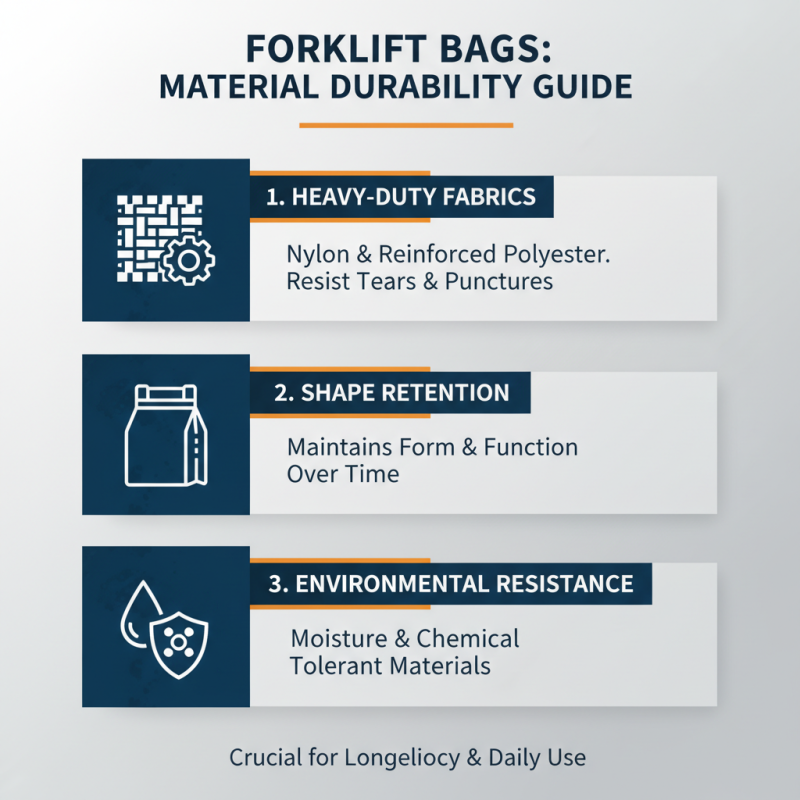
When selecting forklift bags for your business, evaluating material durability is crucial. The longevity of the bags is directly linked to the types of materials used in their construction. Look for fabrics that can withstand the rigors of daily use, such as heavy-duty nylon or reinforced polyester. These materials not only provide resistance to tears and punctures but also maintain their shape and functionality over time. Consider the environmental factors your bags may be exposed to, such as moisture or chemicals, and choose materials designed to handle these conditions effectively.
In addition to durability, weight capacity must also be a key consideration. Each forklift bag will have specific load limits that dictate how much weight it can safely carry. It's essential to assess your typical loads and select bags that can comfortably accommodate them without risking potential damage or safety hazards. Overloading a bag can lead to premature wear or failure, which can disrupt your operations and incur additional costs. By carefully evaluating both the material durability and weight capacity of forklift bags, you can ensure your investment meets the demands of your business while enhancing operational efficiency.
Assessing Size and Compatibility with Your Forklift Model
When it comes to selecting the best forklift bags for your business, size and compatibility with your specific forklift model are critical factors to consider. A properly fitting bag ensures not only optimal performance but also safety and efficiency in handling materials. Measure the dimensions of your forklift and assess the available space for storage attachments. Understanding your forklift's specifications will guide you in picking bags that support your operational needs without risking interference with the equipment's functionality.
Tips for selecting the right forklift bags include checking the weight capacity. It’s essential that the bags can bear the intended load while maintaining structural integrity. Additionally, consider the material of the bags – they should offer durability, resistance to wear and tear, and protection from environmental elements. Look for features such as reinforced seams and sturdy closures to enhance the longevity of the bags and to ensure that goods are securely stored and transported.
Another important aspect is the ease of attachment and detachment from the forklift. Bags designed with compatible hooks, straps, or brackets that align with your forklift's model will ensure a seamless experience. Evaluate how easily each bag can be loaded and unloaded, as this affects not only efficiency but also the safety of your operations. With careful consideration of these factors, you can make an informed decision in choosing forklift bags that meet your business requirements effectively.
Top Tips for Choosing the Best Forklift Bags for Your Business Needs - Assessing Size and Compatibility with Your Forklift Model
| Forklift Model |
Bag Size (L x W x H, in inches) |
Material Type |
Weight Capacity (lbs) |
Compatibility Notes |
| Model A |
40 x 30 x 25 |
Nylon |
1000 |
Fits standard forks |
| Model B |
36 x 28 x 20 |
Polyester |
800 |
Requires adapter plate |
| Model C |
50 x 35 x 30 |
Canvas |
1200 |
Best for heavy load usage |
| Model D |
44 x 32 x 22 |
Heavy Duty PVC |
1500 |
Works with extended forks |
Considering Safety Features and Compliance Standards for Forklift Bags
When selecting forklift bags for your business, prioritizing safety features and compliance standards is crucial. According to the Occupational Safety and Health Administration (OSHA), improper handling of materials can lead to significant workplace injuries, with nearly 100,000 incidents reported annually in the warehousing sector alone. Therefore, selecting forklift bags made from durable, high-strength materials that can withstand rigorous handling is essential. Look for bags that come with reinforced seams and load-bearing capacities that meet or exceed industry standards to ensure they can handle the weight of the materials being transported without compromising safety.
Additionally, compliance with safety standards such as those set by the American National Standards Institute (ANSI) is paramount. A report by the National Safety Council indicates that companies adhering to ANSI guidelines experience 20% fewer workplace accidents. Ensuring that your forklift bags are compliant not only protects your workforce but also safeguards your business against potential penalties and liabilities. Features such as bright colors or reflective strips can also enhance visibility, reducing the risk of collisions in busy environments. By investing in forklift bags that prioritize safety and compliance, businesses can create a safer working environment and maintain operational efficiency.
Top Tips for Choosing the Best Forklift Bags for Your Business Needs
This chart illustrates the importance ratings of various criteria to consider when selecting forklift bags. Key factors include durability, weight capacity, safety features, compliance standards, and cost effectiveness. Each criterion is rated on a scale of 1 to 10, with safety features being the most critical element for ensuring operational integrity and meeting industry regulations.
Calculating Cost-Effectiveness and Long-Term Investment Value of Forklift Bags
When selecting forklift bags for your business, it is crucial to carefully calculate their cost-effectiveness and assess their long-term investment value. Initially, consider the upfront costs of the bags in relation to the functionalities they offer. Cheaper options may save money now, but they might not withstand heavy usage, leading to frequent replacements and higher long-term costs. Instead, focus on bags that balance a reasonable initial price with durability and multi-functionality. Investing in higher-quality forklift bags can minimize downtime and maintenance issues, ultimately contributing to more efficient operations.
Another important aspect is to evaluate the potential return on investment (ROI) from using forklift bags designed for your specific business needs. Analyze how these bags can improve your workflow, enhance safety, and optimize storage efficiency. A well-chosen forklift bag can facilitate smoother handling of materials, leading to increased productivity and reduced labor costs over time. By projecting the savings and efficiency gains, businesses can see the long-term value created by making an informed choice rather than opting for the lowest price available.