Choosing the right i ton bags can shape storage, transport, and handling costs across international supply chains. These flexible intermediate bulk containers, often called FIBCs, are not identical despite similar appearances. Fabric weight, seam construction, lifting loops, discharge designs, and liner options affect daily performance.
This guide reviews ten practical i ton bags for global buyers. It considers common materials, loading needs, moisture exposure, stacking conditions, and shipping environments. Each selection reflects details buyers can inspect, such as reinforced corners, clear labels, UV treatment, and documented safe working loads. Small features matter. A strong base can prevent costly product loss. A well-fitted liner can protect powders from humidity and contamination.
Reliable purchasing also requires more than attractive photographs. Buyers should request technical specifications, test reports, sample approvals, and consistent production records. Suppliers with clear communication are easier to evaluate. Their answers should match the bag’s intended use. One design may suit grains, while another performs better with minerals, chemicals, or construction materials. Product compatibility must be confirmed professionally.
There is no universal best bag. That point is easy to overlook. Even experienced buyers can choose poorly when they focus only on price or printed capacity. This overview offers a useful starting point, not a substitute for application testing. Seasonal weather, warehouse equipment, and local handling habits can change the final decision. A careful comparison helps global buyers select i ton bags that are safer, more efficient, and better suited to real operating conditions.
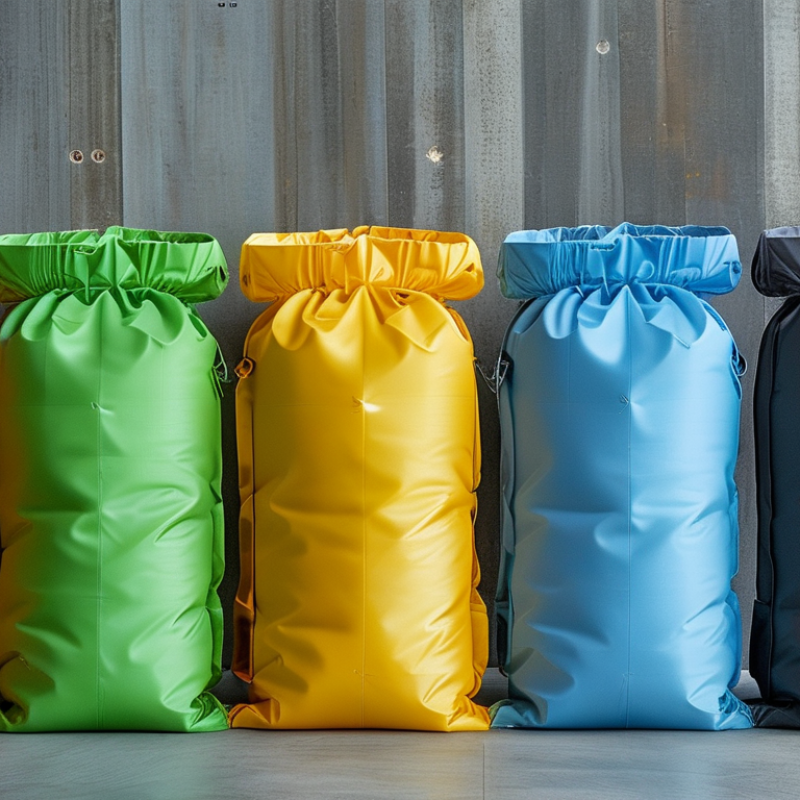
I ton bags, often called one-ton bulk bags, are flexible containers for transporting dry materials. They usually use woven polypropylene fabric, reinforced lifting loops, and an optional inner liner. A filled bag can hold about 1,000 kilograms, but capacity depends on material density and design. The label can mislead.
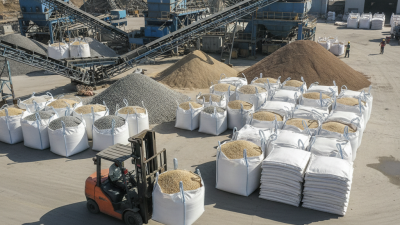
In practical warehouse operations, these bags support agriculture, construction, mining, food processing, and manufacturing. Farmers use them for seeds, grains, and soil products. Construction teams load sand, cement mixtures, or stone powders. Food facilities may select clean, food-grade bags for flour, starch, or sugar. Different industries need different discharge openings, liners, fabric strengths, and lifting systems. A bag designed for granular materials may perform poorly with fine powder. Product specifications matter more than appearance.
Buyers should check safe working load, safety factor, stitching quality, moisture protection, and stacking guidance. They should also confirm testing documents and destination-market requirements before shipment. Measure twice. Never reuse a bag without checking its history and condition. Small cuts, stretched loops, or damp fabric can create serious handling risks. I ton bags reduce packaging volume, but they are not invincible. In my view, many purchasing errors come from choosing the lowest price too quickly. A detailed specification often prevents damaged cargo, delayed unloading, and unnecessary waste.
Top 10 I Ton Bags for Global Buyers
Key Factors for Evaluating I Ton Bags Across International Markets
Global buyers should assess I-ton bags by use, load type, and destination requirements. A bag for dry powder needs different fabric than one for coarse minerals. Check the working load limit, safety factor, fabric weight, and seam strength. These details affect handling safety and service life.
Inspect the bag’s construction closely. Look at lifting loops, discharge spouts, stitching density, and liner fit. During sourcing inspections, I have found that weak corner stitching often appears before fabric damage. Request production samples, test reports, and batch traceability. Clear documentation builds confidence, but paperwork alone cannot replace physical inspection.
International markets also require careful attention to dimensions, labeling, moisture protection, and transport conditions. A bag stored in a humid port may need an inner liner and stronger packaging. Confirm whether the design fits pallets, containers, and warehouse equipment. Cost comparisons can mislead. A cheaper bag may create higher labor costs through spills, poor stacking, or difficult discharge.
Practical testing matters most.
Buyers should also review supplier communication and corrective-action records. Reliable suppliers explain limitations instead of promising perfection. I-ton bags can still fail when users overload them or store them poorly. This point is easy to overlook. A clear handling guide, realistic testing, and regular inspection support safer purchasing decisions across international markets.
Top 10 I Ton Bags for Global Buyers
Top 10 I Ton Bag Types for Different Cargo and Handling Needs
One-ton bags are selected by cargo behavior, not capacity alone. Grand View Research valued the global flexible intermediate bulk container market at about USD 6.3 billion in 2023, showing strong demand for standardized bulk handling. However, a one-ton rating does not suit every material. Always confirm safe working load, safety factor, filling density, and lifting equipment.
Standard U-panel bags suit dry powders and granules. Circular bags reduce seam exposure and support uniform filling. Four-panel bags offer firmer walls for pallet storage. Baffle bags keep a square shape inside containers. Ventilated bags help agricultural products release heat and moisture. Sift-proof bags limit fine powder leakage through stitched seams. Food-grade bags require clean production and traceable materials. Conductive Type C bags need grounding during powder handling. Antistatic Type B bags reduce surface charge in controlled environments. Type D bags dissipate static without a grounding connection, but site conditions still matter.
ISO 21898 provides requirements for flexible intermediate bulk containers, including design, testing, and safe handling. In practice, lifting loops should remain vertical, with no twisted fabric or uneven forklift contact. A warehouse trial may reveal issues that a specification sheet misses. I would not choose a coated bag for every powder; moisture protection can also affect discharge behavior. The right top, bottom, liner, and discharge valve depend on filling speed, dust control, and final unloading conditions. Safety margins deserve another review.
| No. | Bag Type | Typical Construction | Typical Size & Capacity | Top / Bottom Configuration | Recommended Cargo | Preferred Handling | Important Selection Criteria |
|---|---|---|---|---|---|---|---|
| 1 | Standard Four-Loop FIBC | Coated or uncoated woven polypropylene body with four corner lifting loops; commonly designed with a 5:1 safety factor for single-trip use. | Approximately 90 × 90 × 110 cm; nominal working load of 1,000 kg, depending on bulk density. | Open top, duffle top or filling spout; plain bottom or discharge spout. | Granules, powders, pellets, minerals, agricultural products and construction materials. | Forklift, crane frame or pallet-based handling using all four loops. | Best general-purpose option; verify filling density, loop configuration, liner requirements and stacking conditions. |
| 2 | Circular Tubular FIBC | Tubular woven polypropylene fabric forms the main body, reducing seams and providing a smooth internal surface. | Commonly 90–95 cm in diameter and 100–120 cm high; nominal load around 1,000 kg. | Spout top with tie closure; discharge spout, iris closure or plain bottom. | Fine powders, resins, pigments and products where reduced seam exposure is useful. | Forklift or lifting frame; use the specified lifting loops evenly. | Suitable for products requiring good containment; check flow behavior and whether an inner liner is needed. |
| 3 | Baffle FIBC | Woven polypropylene body with internal corner baffles that help the filled bag retain a more rectangular shape. | Often approximately 90 × 90 × 120 cm; nominal capacity of 1,000 kg, subject to product density. | Filling spout, duffle top or open top; discharge spout or plain bottom. | Powders and granules requiring efficient warehouse or container utilization. | Forklift or crane handling; commonly selected for stable palletized storage. | Improves shape retention and space efficiency; confirm baffle design does not restrict product discharge. |
| 4 | Ventilated FIBC | Woven polypropylene fabric with engineered ventilation strips or breathable panels to promote air circulation. | Commonly 90 × 90 × 110 cm; nominal working load of approximately 1,000 kg. | Open or duffle top; plain bottom or discharge spout. | Fresh produce, firewood, agricultural materials and goods that require airflow. | Forklift or lifting frame; keep ventilation panels unobstructed during storage. | Select only when airflow is beneficial; it is not appropriate for moisture-sensitive powders without a suitable liner. |
| 5 | Food-Contact FIBC | Manufactured using materials and production controls specified for the intended food-contact application, often with a clean inner liner. | Approximately 90 × 90 × 110 cm; nominal load of 1,000 kg, depending on bulk density. | Hygienic filling spout with tie or dust-proof closure; sanitary discharge spout or plain bottom. | Flour, sugar, starch, grains, powdered ingredients and other approved food materials. | Forklift, pallet or lifting frame in clean, dry handling areas. | Confirm food-contact documentation, cleanliness controls, liner material and applicable import regulations. |
| 6 | FIBC with PE Inner Liner | Woven polypropylene outer body fitted with a polyethylene liner for improved moisture, dust and contamination control. | Typically 90 × 90 × 110 cm; nominal working load of approximately 1,000 kg. | Liner with filling spout or open top; liner and outer-bag discharge spouts may be combined. | Fine powders, hygroscopic materials, chemicals, mineral products and sensitive ingredients. | Forklift or crane frame; avoid snagging or puncturing the liner. | Choose liner thickness, fit and closure style according to moisture sensitivity, filling temperature and discharge method. |
| 7 | Coated FIBC | Woven polypropylene fabric laminated with a coating that reduces fabric porosity and improves resistance to external moisture. | Approximately 90 × 90 × 110 cm; nominal load around 1,000 kg. | Duffle or spout top; plain bottom or controlled discharge spout. | Dry powders, cementitious materials, pigments, salts and products needing better dust control. | Forklift, pallet or lifting frame; protect the coating from sharp edges. | Coating helps reduce permeability but does not make the package waterproof; consider a liner for high moisture protection. |
| 8 | UN-Certified FIBC | FIBC designed, tested and marked for specified dangerous-goods applications under the applicable UN packaging requirements. | Commonly 90 × 90 × 110 cm; permitted mass and packaging group depend on the approved design. | Secure filling and discharge closures selected as part of the approved packaging design. | Specific solid dangerous goods when the relevant UN approval covers the cargo and transport method. | Use only according to the certification, marking and dangerous-goods handling instructions. | The UN marking is not universal approval; verify UN number, packing group, test level, closure and destination-country rules. |
| 9 | Type C Conductive FIBC | Conductive fabric containing interconnected conductive yarns that must be properly grounded during filling, emptying and handling. | Typically 90 × 90 × 110 cm; nominal working load of approximately 1,000 kg. | Conductive filling and discharge arrangement with a designated grounding point. | Combustible powders or materials handled in potentially explosive dust atmospheres. | Grounded filling and emptying equipment operated under a documented static-control procedure. | Ground continuity must be checked before use; never use without verified grounding and suitable site risk assessment. |
| 10 | Type D Antistatic FIBC | Special antistatic fabric designed to dissipate electrostatic charge without a dedicated grounding connection, when used correctly. | Approximately 90 × 90 × 110 cm; nominal working load around 1,000 kg. | Spout top and bottom configurations selected to maintain the required electrostatic performance. | Combustible powders and sensitive products where static-control performance is required. | Use in accordance with the bag specification, site procedures and qualified static-control assessment. | Keep the fabric clean and undamaged; Type D bags must not be used with conductive contamination or unsuitable environments. |
Choosing among one-ton FIBC bags requires more than comparing prices. Grand View Research estimated the global FIBC market at about USD 5.2 billion in 2023. Its projected growth reflects rising demand for efficient bulk packaging. However, market growth does not make every design suitable.
Start with the product and handling method. A four-panel bag suits many dry, stable materials. A circular bag can reduce seams and improve shape retention. Baffle bags hold a squarer profile, saving warehouse space. Coated fabric can limit moisture entry, while an inner liner may protect fine powders. Check the safe working load, not only the advertised capacity. ISO 21898 specifies performance testing for flexible intermediate bulk containers, including lifting and stacking conditions. A one-ton rating means 1,000 kilograms under stated conditions, not unlimited stress. Confirm the safety factor, filling density, discharge outlet, and lifting-loop design.
Transport details matter too. UNCTAD’s Review of Maritime Transport 2024 reports that over 80% of global merchandise trade by volume moves by sea. Bags may face vibration, humidity, compression, and repeated handling. Select fabric strength and pallet dimensions accordingly. In procurement checks, I compare seam samples, loop stitching, fabric coating, and actual filled dimensions. Catalog photos can mislead. A perfectly shaped bag may perform poorly when filled unevenly. I still see buyers focus on fabric thickness alone, which is an incomplete test. Ask for test certificates, batch traceability, and documented load results before approving large orders.
Top 10 I Ton Bags for Global Buyers
Global buyers commonly compare ten FIBC designs: standard four-panel, U-panel, circular, baffle, coated, uncoated, ventilated, sift-proof, food-contact, and conductive bags. Selection should follow the cargo, filling method, discharge system, and destination rules. ISO 21898:2004 covers many flexible intermediate bulk container requirements, including construction and testing. A 1,000-kilogram safe working load is common, but buyers should verify the safety factor, often 5:1 or 6:1, on the test certificate. Do not trust a printed label alone.
Safety evidence matters. Request batch traceability, seam inspection records, fabric test results, and lifting-loop specifications. Food-contact bags need applicable material declarations for each market. Conductive designs require controlled grounding procedures and suitable electrostatic testing, not simply black fabric. In my experience, vague “export quality” claims create delays. Sometimes the supplier’s certificate is valid, but the bag configuration has changed. That weakness deserves attention.
Shipping choices affect landed cost. UNCTAD’s Review of Maritime Transport reports that ships carry over 80% of global merchandise trade by volume, so moisture, compression, and port handling deserve practical planning. The World Bank’s Logistics Performance Index 2023 assesses 139 economies across customs, infrastructure, shipment quality, and timeliness. Buyers should confirm container loading diagrams, pallet requirements, liner protection, and humidity controls before production. A small dimensional error can leave unused container space. Request a pre-shipment sample, photograph the loaded container, and record the seal number. Mistakes still happen. Good documentation makes them traceable.
Global buying, safety, certification, and shipping considerations based on common nominal bag dimensions.
The chart compares nominal internal volumes calculated from commonly used FIBC dimensions. A 1-ton rating refers to the specified safe working load, not a guaranteed volume or product density. Before ordering, confirm the tested SWL, safety factor, lifting-loop design, liner requirements, moisture protection, and filling and discharge configuration.
For international shipments, verify whether UN-certified construction is required under the applicable dangerous-goods rules. Relevant technical checks may include ISO 21898 for flexible intermediate bulk containers and IEC 61340-4-4 for electrostatic classification. Food-contact, recycling, labeling, and import requirements should be confirmed for the destination market.
Copyright 2025 © Custom Packaging Products | All Rights Reserved