A half gaylord box is a large corrugated container designed for bulk storage, handling, and shipping. It is generally smaller than a full Gaylord, but the name has no single universal dimension. Some suppliers offer footprints near 36 by 36 inches, while others use custom sizes. Height also changes with the product and warehouse system. The name sounds standardized. It is not.
Industry demand helps explain its popularity. Smithers’ report, The Future of Corrugated Packaging to 2028, identifies e-commerce, warehouse efficiency, and fiber-based packaging as major market influences. These trends favor containers that hold more than cartons, but occupy less space than full bulk boxes. A half gaylord box can hold components, produce, retail returns, or manufacturing scrap. Picture a pallet with a waist-high fiber container, reinforced corners, and a liner protecting small parts from dust. That practical scale can simplify picking and reduce unnecessary empty volume.
Sustainability claims still require careful judgment. The American Forest & Paper Association reported a 2023 recovery rate of about 69% for corrugated containers in the United States. Recovery depends on clean fibers, local collection systems, and proper sorting. A wet or heavily contaminated box may not perform as expected. This matters. Buyers should confirm board strength, edge-crush specifications, moisture resistance, pallet compatibility, and safe working load before ordering. A supplier’s “half” may differ from another supplier’s version. That is the detail many quick definitions miss. For reliable selection, compare interior dimensions, flute type, closure style, and test documentation rather than relying on the label alone.
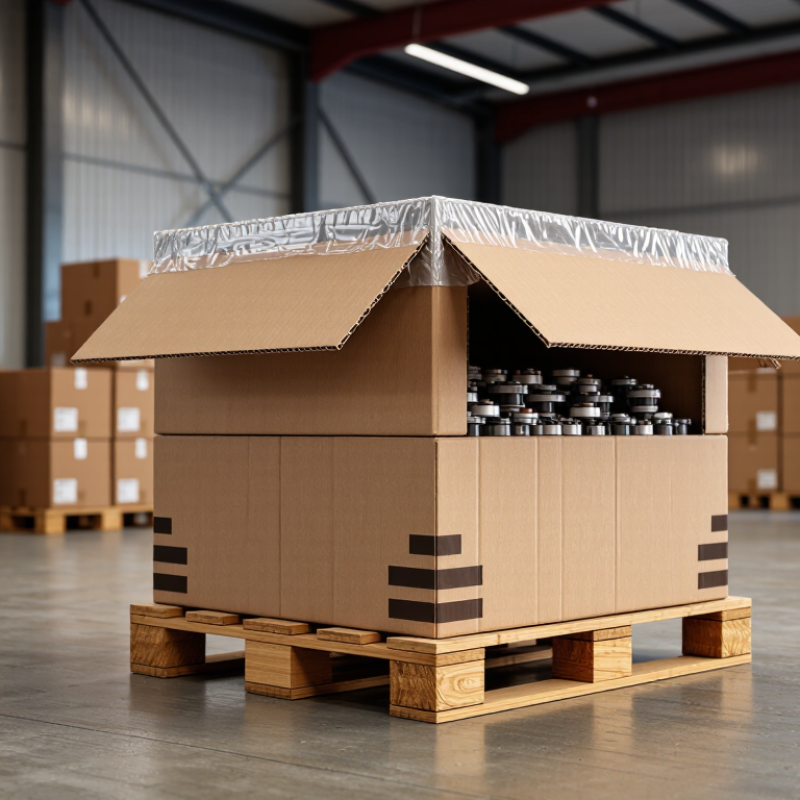
A half Gaylord box is a large corrugated container with reduced capacity. It commonly uses about half the footprint of a full bulk box. However, “half” is not an exact industry dimension. Actual sizes vary by supplier, pallet design, and production needs. Many models measure near 36 by 36 inches, but this should never be assumed. Always check the external and internal measurements.
Its walls usually contain several corrugated layers for stiffness. A flat base supports pallet handling, while top flaps close the load. Some versions include a separate pallet, attached bottom, or fitted liner. These details affect setup time and stability. A half Gaylord box suits moderate-volume materials, sorting stations, and warehouse transfers. It can hold molded parts, packaged food ingredients, paper goods, or recyclable materials when the construction matches the load. Dry contents are safer. Moisture can weaken corrugated fibers quickly.
In practical handling, operators should inspect corners, seams, and the bottom before filling. A box may look strong but fail when contents shift during movement. Keep the weight centered and avoid loading above the marked fill line. Stacking also depends on compression strength, not appearance. A common planning mistake is treating every half Gaylord as interchangeable. That approach can create wasted space or unstable pallets. The term is useful, but the specification sheet matters more.
What Is a Half Gaylord Box?
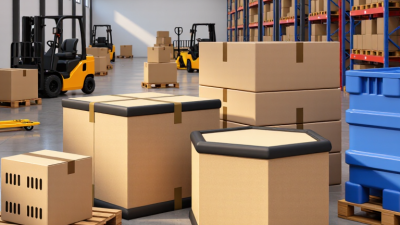
A half Gaylord box is a large corrugated container designed for pallet handling. It usually occupies a standard 48-by-40-inch pallet footprint. Its height often ranges from 20 to 24 inches, but dimensions vary by supplier and application. This variation matters. A box called “half” may describe its height, volume, or a cut-down full container.
Most models use double-wall or triple-wall corrugated fiberboard. The outer liners resist abrasion, while the fluted layers provide compression strength. A wooden, plastic, or reinforced fiberboard pallet supports the base. Some designs include a separate sleeve, bottom cap, and top cap. These parts distribute pressure and help protect contents during movement. The exact board grade should match the expected load, not just the product’s weight.
Structural design depends on stacking height, moisture exposure, and handling equipment. A box filled with dense parts needs stronger vertical walls than one holding lightweight packaging. Forklift entry must remain clear beneath the pallet. Corner posts or reinforced seams can reduce bulging during storage. In my experience, a small change in fill height can affect stability more than expected. That detail is easy to miss.
Always verify inside dimensions before ordering. Outside measurements include the pallet and wall thickness. A practical inspection should check crushed corners, damp fibers, and weak bottom joints. Load ratings are useful, but they are not universal. They can change with humidity, stacking patterns, and uneven floors. The specification may look precise, yet real warehouse conditions still require judgment.
| Data Category | Typical Specification | Practical Details |
|---|---|---|
| Definition | Large corrugated bulk container | A half Gaylord box is a reusable or single-trip bulk box designed for palletized storage, handling, and shipping of loose or packaged materials. |
| Common Exterior Footprint | Approximately 36 × 36 inches | Equivalent to about 914 × 914 mm. Actual dimensions vary by converter, pallet type, and intended load. |
| Common Exterior Height | Approximately 36 inches | Other heights, commonly from about 24 to 48 inches, may be produced for different storage and transport requirements. |
| Typical Internal Capacity | Approximately 20 to 25 cubic feet | Usable volume is lower than the calculated external volume because of board thickness, liners, flaps, and interior supports. |
| Primary Material | Corrugated fiberboard | The box is generally manufactured from kraft linerboard bonded to fluted corrugated medium. |
| Board Construction | Double-wall or heavy-duty single-wall | Double-wall construction is commonly selected for heavier contents, stacking, and longer distribution cycles. |
| Flute Profile | Combination flute, such as BC, or heavy-duty B/C flute | Larger flute profiles improve cushioning and stacking strength; the exact profile depends on the required compression performance. |
| Board Strength | Commonly 275 to 500 lb test, or equivalent ECT grade | The correct grade should be selected according to product weight, moisture exposure, stacking height, and shipping duration. |
| Bottom Design | Attached bottom flaps or a separate fitted bottom | A reinforced bottom distributes load across the pallet and helps reduce bulging or tearing during lifting. |
| Top Closure | Open top, full flaps, or removable lid | Open-top designs support quick loading, while lids or full flaps provide protection from dust, light, and handling damage. |
| Pallet Compatibility | Usually placed on a matching or slightly larger pallet | The box should sit fully on the pallet deck without excessive overhang to improve stability during transport. |
| Reinforcement Options | Corner posts, edge protectors, liners, and sleeves | Additional components help control sidewall deformation and protect products with sharp edges or uneven weight distribution. |
| Typical Load Range | Approximately 500 to 2,000 pounds | Capacity is highly dependent on board grade, box design, pallet support, load distribution, and stacking conditions. Always verify the certified rating. |
| Empty Box Weight | Approximately 20 to 45 pounds | Weight changes with dimensions, board grade, liners, lids, and reinforcement components. |
| Moisture Resistance | Limited unless treated | Standard corrugated fiberboard weakens when exposed to water or high humidity. Wax coatings, treated paper, or plastic liners can improve resistance. |
| Handling Method | Forklift or pallet jack | The container should remain supported by the pallet during movement and should not be lifted by its sidewalls or flaps. |
| Common Applications | Recycling, parts, produce, ingredients, and industrial materials | Half Gaylord boxes are useful where a full-size bulk box is too large or where improved access and product segregation are needed. |
| Recyclability | Generally recyclable as paper-based packaging | Recycling may be limited if the box is heavily contaminated or contains non-paper coatings, plastic liners, or other attached materials. |
Note: “Half Gaylord” is an industry term rather than a single globally standardized size. Confirm the manufacturer’s internal dimensions, board grade, edge-crush or box-compression rating, and maximum safe load before ordering or stacking.
A half Gaylord box is a large corrugated container designed for palletized handling. It usually offers about half the footprint of a full bulk box, but dimensions can vary by supplier. Its reinforced walls hold loose products, components, produce, or lightweight materials during storage and shipping. The box normally sits on a pallet, allowing forklifts or pallet jacks to move it safely.
In packaging operations, half Gaylord boxes help separate product types without using several small cartons. They work well when a full bulk box would leave too much empty space. A warehouse team might fill one with molded parts, then move it directly to a production area. Some models include a removable lid, discharge flap, or protective liner. Moisture, sharp edges, and uneven loading still require attention. A strong box is not automatically a safe box. Load weight, stacking height, and pallet condition must match the supplier’s specifications. It is easy to overlook the pallet.
Tips: Check the inside dimensions before ordering. Confirm the box fits your pallet and shelving. Use liners for dusty or moisture-sensitive goods. Distribute weight evenly, and avoid forcing the flaps closed. Mark the gross weight clearly. Test one filled box before changing the entire shipping process. This small trial can reveal crushed corners, unstable loads, or awkward forklift access. Sometimes the “right size” is not the most efficient choice.
What Is a Half Gaylord Box?
A half Gaylord box is a large corrugated container with reduced height or volume. Its footprint often matches a full Gaylord box, but dimensions vary by supplier. Always verify internal size before ordering. In warehouse use, the lower wall makes loading, counting, and hand access easier. Workers can reach the bottom without climbing or leaning deeply. That detail matters when loose parts, produce, or recycled materials move frequently.
The main advantage is handling efficiency. A half box may reduce lifting strain and fit beneath lower storage racks. It can also limit overfilling, which helps protect fragile contents. A full Gaylord box offers greater capacity and fewer containers per shipment. It usually suits stable, high-volume loads. However, one half box may cost more per usable cubic foot. More boxes can also increase labeling, movement, and disposal work. The trade-off is easy to miss.
A 2023 U.S. paper recovery report recorded 46.6 million short tons of paper recovered, with a recovery rate near 68%. That figure supports recyclable corrugated packaging, but recycling depends on clean, dry material. Moisture weakens board quickly. Industry testing under ISTA 3E and ASTM distribution standards can reveal whether a half box survives stacking, vibration, and compression. A small trial is wiser than a confident guess. Some half boxes fail when loads shift sideways. Others perform well because the contents support the walls.
A half Gaylord box typically uses the same 48 × 40 inch footprint as a full box but is approximately half as tall. This improves access and handling, while reducing total cubic capacity.
Planning values shown: half box, 48 × 40 × 24 inches and approximately 26.7 cubic feet; full box, 48 × 40 × 48 inches and approximately 53.3 cubic feet. Actual dimensions and load limits vary by construction and supplier.
What Is a Half Gaylord Box?
A half Gaylord box is a large, pallet-sized corrugated container with reduced height. It holds bulk materials while allowing easier loading and manual access. Its exact dimensions and strength vary by manufacturer and board construction.
Selecting the right box starts with the material, weight, and storage environment. Check the rated capacity, pallet fit, wall height, and moisture exposure. Dense parts may require stronger double- or triple-wall corrugated board. Loose goods need an inner liner to prevent dust and small pieces from escaping. Measure the available rack space first. That simple step prevents expensive handling problems.
Handle the box on a sound pallet. Keep the load centered and below the upper edge. Do not drag a filled container across concrete. Forks should fully support the pallet, not press against the box walls. Inspect crushed corners, wet panels, and split bottom seams before moving it. A damaged box may look usable but fail during lifting.
Reuse is practical when the container stays dry, clean, and structurally firm. Recycling requires emptying the box and removing plastic liners, foam, labels, and heavy tape when possible. Flatten the corrugated panels for collection. Food residue, oil, or chemical contamination can reduce recycling options. Local facilities differ, so confirm their requirements instead of assuming every box follows the same process. It is easy to overlook the pallet. Recycle it separately.
Copyright 2025 © Custom Packaging Products | All Rights Reserved