10 Best Fertilizer Packaging Bags for Global Buyers

Choosing the right fertilizer packaging bags affects product protection, transport efficiency, and customer confidence. Global buyers must consider more than price. Bag strength, moisture resistance, filling speed, print quality, and storage conditions all matter.

This guide examines ten practical bag types used for fertilizers and soil products. Options may include woven polypropylene bags, kraft paper sacks, laminated bags, valve bags, and flexible bulk containers. Each design serves a different purpose. A 25-kilogram woven bag may suit retail distribution, while a one-ton bulk bag can reduce handling during industrial shipments. Details matter. A weak seam can split under pressure. Poor moisture control can cause fertilizer to harden before use.

The evaluation also considers material consistency, closure performance, pallet stability, and customization. Reliable manufacturers should provide clear specifications, inspection records, and test information. Buyers should verify applicable packaging, labeling, recycling, and transport requirements in each destination market. Standards vary across regions.

No bag is perfect. A highly durable structure may increase material use, while a lightweight design may need stronger handling controls. That trade-off deserves careful review. Real purchasing decisions depend on fertilizer type, filling equipment, warehouse humidity, shipping distance, and budget. The recommendations ahead are designed to support informed comparison, not replace supplier verification. Before placing a large order, request samples and test them under realistic conditions. Small trials often reveal problems that product photos conceal.
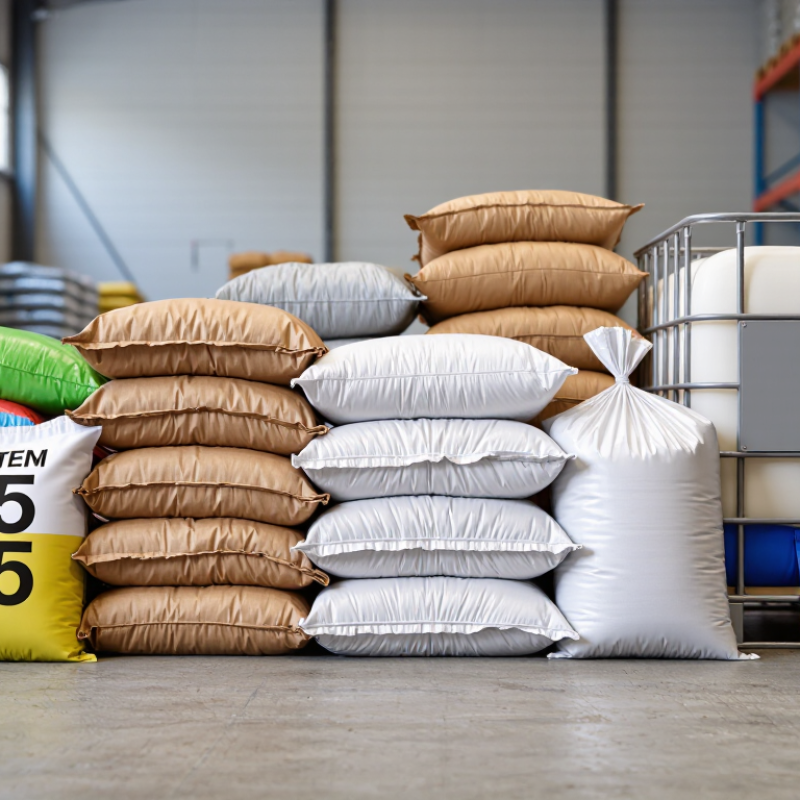
10 Best Fertilizer Packaging Bags for Global Buyers

What Defines a High-Quality Fertilizer Packaging Bag

What Defines a High-Quality Fertilizer Packaging Bag

A high-quality fertilizer packaging bag protects contents from moisture, tearing, and contamination. This matters as global fertilizer demand remains substantial. The International Fertilizer Association estimated 205.8 million tonnes of nutrient demand in 2023/24. Every shipment therefore needs dependable packaging, not attractive graphics alone.

Material selection comes first. Woven polypropylene provides useful tensile strength and controlled flexibility. A laminated inner layer can reduce moisture entry during ocean transport. The bag should also resist punctures at corners and lifting points. In practical warehouse checks, weak stitching often appears before fabric damage. That small failure can create expensive product loss. ISO 23560:2021 highlights performance considerations for woven polypropylene fertilizer sacks, including construction and testing requirements. Buyers should request test certificates, batch records, and seam-strength results.

Fit matters too. A reliable bag sits firmly on pallets and keeps its shape during stacking. Clear product identification supports traceability, especially when shipments cross several borders. UV resistance deserves attention in outdoor storage. However, no material performs perfectly under unlimited sunlight or rain. Buyers should question vague claims and require measured test conditions. Packaging choices can still be improved. Recyclability, lightweight design, and barrier performance may conflict, so purchasing teams should compare the complete lifecycle rather than one specification. The United Nations Environment Programme’s Global Waste Management Outlook 2024 reinforces the need to reduce material waste while improving resource efficiency.
10 Best Fertilizer Packaging Bags for Global Buyers

What Defines a High-Quality Fertilizer Packaging Bag? The chart compares common commercial fill-weight ranges for major fertilizer bag formats. A high-quality bag should also provide reliable seam strength, moisture protection, accurate filling, UV resistance, and safe handling performance.

Typical commercial ranges are shown for buyer reference; exact capacity depends on material construction, product density, filling method, and regional handling requirements.

Ten Leading Fertilizer Packaging Bag Types and Their Uses

Ten leading fertilizer packaging bag types serve different handling and storage needs. Woven polypropylene bags suit granular fertilizers and resist rough loading. Kraft paper bags offer a printable surface for product information. Polyethylene laminated bags improve moisture protection during humid transport. Valve bags support fast, clean filling on automated lines. Open-mouth bags work well for smaller batches and manual packing. BOPP laminated bags provide sharp graphics and stronger abrasion resistance.

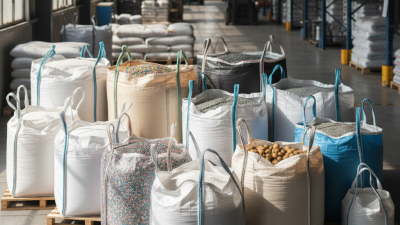
Flexible intermediate bulk containers, often called bulk bags, carry large fertilizer volumes with lifting loops. Gusseted bags stand firmly on pallets and use warehouse space efficiently. Foil barrier bags protect sensitive blends from moisture, oxygen, and light. Recyclable mono-material bags can simplify material recovery where local systems accept them. Each type needs suitable stitching, sealing, and load testing. A strong bag can still fail when filled beyond its rated capacity. That detail is often overlooked.

Tips: Check moisture resistance with a practical storage trial, not only a supplier specification. Confirm bag dimensions against filling equipment and pallet patterns. Ask for batch records, test reports, and clear handling instructions. For international shipments, review labeling, recycling claims, and destination-country requirements. Keep samples for compression and drop tests. Packaging decisions should balance cost, product protection, worker safety, and transport efficiency. An attractive bag is not automatically a reliable one.

Material, Barrier, and Strength Requirements by Fertilizer Type

Fertilizer packaging must match the product, not merely the shipment weight. In field inspections, woven polypropylene bags have performed well for granular urea and NPK products. Their strong woven structure resists tearing during pallet handling. A polyethylene liner adds moisture protection. This matters because damp fertilizer can cake quickly. For hygroscopic products, the liner should be properly sealed, not loosely folded.

Powdered fertilizers need tighter barriers. Laminated woven bags can reduce dust escape and limit moisture entry. Kraft paper bags may suit dry, low-dust formulations when several layers provide enough strength. However, paper can weaken after exposure to rain or humid storage. Phosphate fertilizers often require abrasion-resistant surfaces because fine particles rub against seams. A weak seam can fail before the fabric does. That detail is easy to miss.

Heavy mineral fertilizers and organic blends usually need higher tensile strength. FIBC bags can support bulk transport, but lifting loops require verified load testing. Micronutrient products may need smaller bags with accurate filling control and clear batch information. In my experience, thicker material is not always better. It can increase cost, folding difficulty, and waste without improving protection. Buyers should check drop tests, seam strength, liner integrity, and moisture resistance under realistic warehouse conditions. Laboratory results help, but rough handling still exposes design flaws. No package is perfect.

10 Best Fertilizer Packaging Bags for Global Buyers — Material, Barrier, and Strength Requirements by Fertilizer Type
No. Recommended Bag Type Best-Suited Fertilizer Typical Material Structure Barrier Requirements Strength Requirements Common Capacity Key Selection Considerations
1 Laminated Woven PP Bag Granular urea, NPK, DAP, MAP and potash Woven polypropylene (PP) fabric with a PP or polyethylene (PE) laminated outer layer Good resistance to moisture, dust and short-term outdoor exposure; optional inner liner improves humidity protection High tear and puncture resistance; suitable for mechanical filling, palletizing and container transport 25 kg, 40 kg and 50 kg A versatile export option. Use UV stabilization where bags may be stored outdoors or in strong sunlight.
2 BOPP-Laminated Woven PP Bag Premium NPK, compound fertilizers and retail-oriented granular products Woven PP base laminated with biaxially oriented polypropylene (BOPP) film Strong moisture and dust barrier; printed film provides a smooth, low-porosity surface High tensile strength and good resistance to abrasion, scuffing and handling damage 10 kg, 25 kg and 50 kg Suitable when appearance, clear graphics and clean shelf presentation are important in addition to durability.
3 Multiwall Paper Sack with PE Liner Granular or prilled urea, NPK and mineral fertilizers Two or more kraft paper plies with an internal PE moisture-resistant liner Moderate-to-good moisture protection, depending on liner thickness and closure quality; paper remains sensitive to prolonged wet conditions Good stacking performance and adequate resistance to normal warehouse handling; lower wet strength than plastic sacks 25 kg and 50 kg Offers a paper-based appearance and can reduce plastic content, but requires dry storage and protected transport.
4 Woven PP Bag with Sewn PE Inner Liner Hygroscopic fertilizers such as urea, ammonium nitrate and blended NPK Heavy-duty woven PP outer bag combined with a loose or attached PE liner Enhanced moisture and vapor protection compared with an unlined woven bag; liner closure is critical High load-bearing and puncture resistance from the woven PP shell; liner protects product rather than carrying the full load 25 kg, 40 kg and 50 kg Recommended for humid routes and long storage periods. Avoid trapped condensation by controlling temperature and ventilation.
5 Co-Extruded PE Film Bag Fine powders, water-soluble fertilizers and small consumer packs Multi-layer polyethylene film, commonly incorporating linear low-density PE for toughness Continuous film provides an effective dust and moisture barrier; barrier performance depends on film thickness and seal integrity Good seal strength and flexibility; lower resistance to sharp edges and rough handling than woven PP 1 kg, 5 kg, 10 kg and 25 kg Best for clean, dust-controlled filling and smaller pack sizes. Use thicker film or secondary packaging for palletized export loads.
6 Paper Valve Sack with Moisture-Resistant Coating Dry powdered fertilizers, micronutrients and soil amendments Multi-ply kraft paper with a PE-coated or treated inner ply and a valve closure Moderate moisture resistance and strong dust containment when properly closed; not intended for direct rain exposure Good compression strength for stable pallet stacking; sensitive to puncture and wet handling 10 kg, 20 kg and 25 kg Efficient for automated filling of powders. The valve design should be matched to the product flow and filling equipment.
7 FIBC Bulk Bag with PE Liner Bulk urea, NPK, DAP, potash and blended fertilizers Woven PP bulk bag with four lifting loops and an optional fitted PE liner Good bulk moisture and contamination control when a liner is used; unlined fabric is not fully moisture-tight Typical safe working load is selected according to design and certification, commonly around 500–2,000 kg 500 kg, 750 kg, 1,000 kg and 1,500 kg Reduces secondary packaging and handling cost. Verify safe working load, safety factor, lifting-loop design and discharge configuration.
8 UN-Certified FIBC Fertilizer products classified as dangerous goods under applicable transport regulations Tested woven PP bulk bag, often with a PE liner and certified lifting and closure components Barrier level depends on the liner and approved design; closure must limit leakage during transport Requires documented performance for lifting, stacking, drop and toppling tests according to the relevant UN packaging requirements 500 kg to 1,500 kg Use only after confirming the product’s transport classification, packing instruction, certification marking and destination-country requirements.
9 Paper-Plastic Composite Sack Premium granular fertilizers, blended products and export retail packs Kraft paper outer ply combined with woven or laminated PP/PE inner layers Better moisture and dust protection than conventional paper sacks while retaining a paper-facing surface Good puncture, stacking and handling performance; the plastic inner layer improves wet resistance 25 kg and 50 kg A balanced solution for buyers seeking a paper appearance with stronger protection than standard paper packaging.
10 Anti-Slip Laminated Woven PP Bag High-density granular fertilizers transported on pallets or in mixed container loads Woven PP fabric with laminated film and a textured or anti-slip outer finish Good moisture, dust and abrasion resistance; coating quality should be checked around seams and closures High tensile strength with improved pallet stability and reduced layer movement during vibration and transit 25 kg and 50 kg Useful for long-distance shipping where pallet movement is a concern. Confirm compatibility with automated bagging and pallet-wrapping systems.
Selection note: Actual performance depends on bag dimensions, fabric or film thickness, seam construction, closure method, filling process, pallet pattern, storage humidity, UV exposure and transport conditions. For international procurement, validate drop resistance, seam strength, safe working load, moisture protection and applicable import or dangerous-goods regulations before ordering.

How to Compare Bags for Cost, Compliance, and Sustainability

Global fertilizer buyers should compare bags by total delivered cost, not unit price alone. A cheap sack may require extra liners, stronger pallets, or frequent replacement. Start with product weight, filling speed, stacking height, and transport distance.

Woven polypropylene bags often provide strength, while laminated surfaces improve moisture resistance. For dusty fertilizers, a reliable valve or tightly stitched mouth can reduce leakage during handling.

Compliance needs evidence, not attractive claims. Ask for material specifications, seam-strength results, food-contact exclusions, and applicable packaging documentation. Check whether the bag protects workers from dust exposure during filling and discharge.

Sustainability also deserves careful measurement. Evaluate recycled content, bag weight, reuse potential, and local recycling access. A lighter bag can reduce transport emissions, but it may tear under rough warehouse conditions. That trade-off is easy to miss. No package is perfect.

Tips: Request samples filled with the actual fertilizer. Drop-test them from a realistic pallet height. Store one sample in heat and humidity for several weeks.

Compare failed seams, blocked valves, printed warnings, and damaged corners. Keep a simple cost sheet covering bag price, freight, rejected units, and disposal fees.

Ask suppliers for recent test reports, not recycled documents. Also, leave room for doubt: laboratory performance may not match a busy loading yard.

Export, Storage, and Handling Considerations for Global Buyers

Global fertilizer shipments need bags designed for export, storage, and repeated handling. IFA’s Medium-Term Fertilizer Outlook 2024–2028 estimates global nutrient demand at about 205 million tonnes in 2024/25. That volume makes small packaging failures expensive. The ten strongest choices include woven polypropylene sacks, laminated sacks, polyethylene-lined bags, valve bags, open-mouth bags, paper-polymer bags, small retail packs, and one-ton FIBCs. No format is universally best.

UNCTAD’s Review of Maritime Transport 2024 states that over 80% of global merchandise trade by volume moves by sea. Sea exposure demands strong seams, UV resistance, and reliable moisture barriers. A liner helps with hygroscopic products, but it can complicate recycling and filling. FIBCs reduce handling time, while smaller sacks offer easier warehouse counting. ISO 21898 provides useful performance guidance for flexible intermediate bulk containers. Testing should include drop resistance, seam strength, stacking, and leakage checks.

Storage conditions matter just as much. Bags should sit on clean pallets, away from walls, rain, and direct sunlight. Cross-stacking can improve stability, though excessive height may damage lower layers. Clear batch codes support traceability during customs checks and warehouse rotation. Fertilizer classification also depends on formulation, destination, and carrier requirements. Verify documentation before loading. Moisture wins. One weak corner can ruin a full pallet, and I have seen cost-focused designs overlook that simple risk.