10 Best Half Gaylord Box Options for Global Buyers?

Choosing the right half gaylord box can influence shipping stability, storage efficiency, and total packaging cost. Global buyers often compare capacity, board strength, pallet fit, and supplier consistency before placing an order.

A practical evaluation should examine more than catalog photos. Check the box dimensions, stacking rating, flute structure, liner quality, and moisture resistance. A reinforced double-wall box may protect dense parts better than a lighter model. However, stronger construction can increase freight weight and reduce handling efficiency. That trade-off matters.

Export conditions also deserve attention. Confirm whether the box arrives flat-packed, bundled, labeled, and suitable for warehouse equipment. Ask suppliers for specifications, sample testing, production records, and clear quality tolerances. Experienced buyers should also review how the packaging performs during loading, unloading, and long-distance transport. Small differences in pallet height can affect container utilization.

No option fits every operation. Some half gaylord box models perform well with dry, lightweight materials but weaken in humid warehouses. Others offer excellent rigidity but cost more than expected after freight charges. Supplier claims may also lack independent verification. That is worth questioning.

This guide reviews ten practical options for global buyers. It focuses on construction, capacity, durability, handling, customization, and value. The goal is not to promote one universal winner. It is to help purchasing teams compare evidence, identify hidden risks, and select packaging that matches their products, routes, and working conditions.
10 Best Half Gaylord Box Options for Global Buyers?

What Is a Half Gaylord Box and How Is It Used?

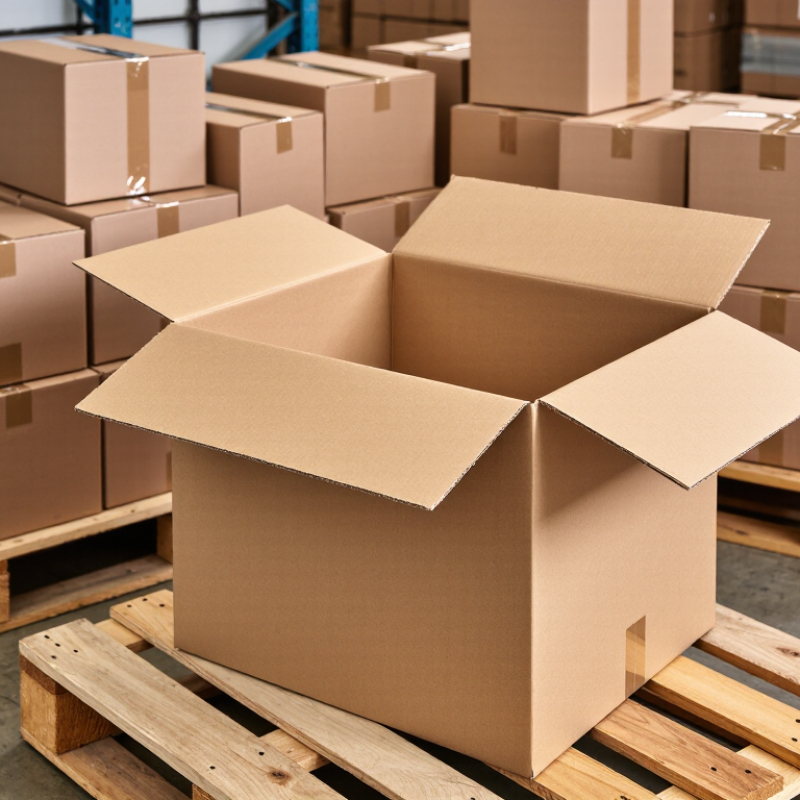
A half Gaylord box is a large corrugated bulk container with approximately half the height or volume of a standard Gaylord box. Its footprint may remain pallet-sized, often near 48 by 40 inches, but dimensions are not fully standardized. Always confirm the manufacturer’s internal measurements.

These boxes hold loose goods, components, produce, or recyclable materials during storage and transport. A warehouse worker can load one with a pallet jack, then access contents without climbing deeply inside.

The correct design depends on board strength, moisture exposure, stacking height, and product weight. A double-wall structure may suit dense parts, while lighter goods can use a single-wall option.

The U.S. Environmental Protection Agency reported a 96.5% recovery rate for corrugated containers in its 2018 Facts and Figures report. That figure supports corrugated packaging’s practical recycling value, but recovery still depends on clean, dry material. Wet boxes lose strength quickly. They also become harder to recycle.

Global buyers should request compression testing, edge-crush data, pallet compatibility, and declared weight limits. ISTA distribution testing can help evaluate vibration, compression, and handling risks. A box that survives a factory floor may fail during ocean transit. That uncomfortable possibility deserves attention. The term “half Gaylord” sounds precise, but it is not. Product specifications matter more than the label.
Key Features to Compare in Half Gaylord Box Options

When comparing the ten best Half Gaylord Box options, start with size and pallet fit. A common footprint may suit a standard pallet, but actual dimensions can vary by supplier. Measure your pallet, shelving, and loading equipment before ordering. A box that leaves only a small gap can reduce shifting during transport. Check capacity in cubic inches, not height alone. Shorter walls may improve access for workers.

Material strength deserves close attention. Compare wall construction, paper grade, edge crush test ratings, and bottom design. For heavier goods, a reinforced base and strong corner seams can prevent costly failure. Ask whether the box has a removable liner or moisture-resistant treatment. Useful details include flat-pack dimensions, assembly time, and safe stacking height. I once saw a seemingly strong container buckle because its contents were unevenly distributed. The specification sheet did not show that weakness.

Handling features also separate practical options from attractive ones. Look for hand holes, forklift compatibility, pallet stability, and clear weight limits. A box with printed handling marks may reduce warehouse mistakes, especially during international transfers. Confirm production consistency, sample approval, and quality inspection records before placing a large order. Recycled fiber can support sustainability goals, but it may perform differently in humid storage. I still prefer testing one loaded sample for several days. It is slower, and sometimes inconvenient, but real warehouse conditions reveal problems that polished product descriptions miss.

The 10 Best Half Gaylord Box Types for Global Buyers

The 10 Best Half Gaylord Box Types for Global Buyers

Half Gaylord boxes suit buyers needing bulk capacity without a full pallet-sized container. In my packing experience, corrugated half Gaylords work well for dry, lightweight goods and short distribution cycles. Heavy-duty corrugated versions handle denser products with stronger sidewalls and reinforced bottoms. Moisture-resistant boxes provide extra protection in humid warehouses or during ocean transport. Ventilated boxes help airflow around produce and other approved agricultural goods. Insulated half Gaylords support temperature-sensitive shipments when paired with suitable liners and monitoring. Always confirm compression strength, inner dimensions, and pallet compatibility before ordering.

Reusable plastic half Gaylords offer consistent sizing and easier cleaning between approved applications. Collapsible plastic models reduce return freight and storage space when empty. Nestable designs improve warehouse efficiency, although their load limits may be lower than expected. Stackable reinforced boxes help stabilize pallet loads during handling. Partitioned half Gaylords separate smaller items and reduce movement inside the container. Export-grade options can include stronger bases, weather-resistant materials, and documented testing. Ask for test reports, material specifications, and sample units before committing to a large purchase. Specifications can look convincing.

No type wins every shipment. A box that performs well in a dry warehouse may fail after humidity exposure. Buyers should review product weight, stacking height, handling equipment, and destination conditions together. Local packaging specialists can verify fit and compliance requirements. I would also test a filled sample, because real cartons often behave differently than laboratory estimates.

10 Best Half Gaylord Box Options for Global Buyers

Comparison of nominal internal volume across commonly specified half-Gaylord configurations

The chart compares representative half-Gaylord box sizes using nominal internal dimensions. Capacity is calculated from length × width × height ÷ 1,728 and shown in US cubic feet. Actual usable capacity can vary slightly with board thickness, flaps, liners, and manufacturer tolerances.

How to Select the Right Box for Products and Shipping Needs

10 Best Half Gaylord Box Options for Global Buyers: How to Select the Right Box for Products and Shipping Needs

A half Gaylord box should match the product, pallet, and route. Measure the inner length, width, and usable height first. A box that is too tall may collapse during stacking. A shallow box may waste pallet space. For dense goods, check the board grade and edge crush rating. For fragile items, add liners or dividers, then test the filled load. The ISTA 3E standard offers a useful framework for palletized transport testing. Do not rely on appearance alone.

Shipping reliability also affects box selection. The World Bank’s 2023 Logistics Performance Index gathered responses from 4,090 supply-chain professionals across 139 economies. It evaluates customs, infrastructure, tracking, and delivery timeliness. These factors support a practical choice: use stronger construction for longer routes and repeated handling. The U.S. EPA reported 67.4 million tons of paper and paperboard packaging in 2018. Recycled fiber can reduce material impact, but its strength may vary. That trade-off deserves testing, not assumptions.

Tips: Compare three box sizes on one pallet. Record product weight, fill level, compression, and damage after handling. Confirm moisture resistance for humid routes. Check whether local recyclers accept the material. A perfect box rarely exists. My own caution is simple: saving a few cents per unit can create higher repacking costs later. Supplier specifications should be verified with a sample shipment before large-scale purchasing.

10 Best Half Gaylord Box Options for Global Buyers? - How to Select the Right Box for Products and Shipping Needs

No. Box Configuration Typical Inside Dimensions
(L × W × H)
Approx. Volume Typical Working Load Common Board Specification Top / Bottom Style Suitable Products Shipping Considerations
1 Standard Half-Height Bulk Box 48 × 40 × 24 in
122 × 102 × 61 cm
26.7 ft³
0.76 m³
Up to 1,000 lb
454 kg
Double-wall corrugated fiberboard
275–350 lb test
Open top; pallet-bottom compatible General parts, packaged goods, textiles, and warehouse replenishment Good balance of footprint and height; verify pallet fit and container clearances
2 Low-Profile Half Gaylord 48 × 40 × 18 in
122 × 102 × 46 cm
20.0 ft³
0.57 m³
Up to 800 lb
363 kg
Double-wall corrugated fiberboard
275 lb test
Open top; standard bottom flaps Small components, retail-ready items, and products requiring easy hand access Lower center of gravity improves handling; offers less cubic capacity per pallet
3 Tall Half-Height Bulk Box 48 × 40 × 30 in
122 × 102 × 76 cm
33.3 ft³
0.94 m³
Up to 1,000 lb
454 kg
Double-wall corrugated fiberboard
350 lb test
Open top; reinforced bottom Lightweight molded parts, bags, cartons, and high-volume non-fragile goods Higher volume efficiency; use stretch wrap or corner protection for stacked loads
4 Heavy-Duty Reinforced Half Gaylord 48 × 40 × 24 in
122 × 102 × 61 cm
26.7 ft³
0.76 m³
Up to 1,500 lb
680 kg
Triple-wall corrugated fiberboard
Heavy-duty grade
Reinforced bottom; optional cover Metal components, dense hardware, industrial parts, and high-weight materials Higher tare weight and freight cost; confirm forklift and pallet-rating requirements
5 Moisture-Resistant Half Gaylord 48 × 40 × 24 in
122 × 102 × 61 cm
26.7 ft³
0.76 m³
Up to 900 lb
408 kg
Water-resistant treated corrugated board
Double-wall construction
Open top; coated or reinforced bottom Agricultural packaging, mildly damp environments, and export consolidation Provides limited moisture resistance, not waterproofing; use a liner for direct liquid exposure
6 Lined Half Gaylord Box 48 × 40 × 24 in
122 × 102 × 61 cm
26.7 ft³
0.76 m³
Up to 850 lb
386 kg
Double-wall corrugated board with polyethylene or paper liner Open top; removable liner Powders, granules, pellets, food-contact applications, and dusty materials Improves containment and cleanliness; liner compatibility must be checked for the product
7 Ventilated Half Gaylord 48 × 40 × 24 in
122 × 102 × 61 cm
26.7 ft³
0.76 m³
Up to 750 lb
340 kg
Double-wall corrugated board with ventilation openings Open or vented top; reinforced bottom Produce, horticultural items, breathable packaging, and temperature-sensitive goods Airflow may reduce condensation; openings can reduce compression strength and weather protection
8 Partitioned Half Gaylord 48 × 40 × 24 in
122 × 102 × 61 cm
24–26 ft³
0.68–0.74 m³
Up to 800 lb
363 kg
Double-wall corrugated board with corrugated dividers Open top; divider-supported bottom Bottles, small assemblies, components, and products needing separation Reduces product-to-product contact; internal dividers add packing labor and material cost
9 Export-Oriented Half Gaylord 48 × 40 × 24 in
122 × 102 × 61 cm
26.7 ft³
0.76 m³
Up to 900 lb
408 kg
Double-wall corrugated board with export-grade pallet support Optional fitted cover; reinforced base International consolidation, contract manufacturing, and long-distance distribution Confirm destination packaging rules, humidity exposure, stacking pattern, and pallet dimensions
10 Compact Non-Standard Footprint Box 44 × 36 × 24 in
112 × 91 × 61 cm
22.0 ft³
0.62 m³
Up to 800 lb
363 kg
Double-wall corrugated fiberboard
275–350 lb test
Open top; pallet-specific bottom Narrow aisles, smaller pallets, mixed-load distribution, and space-limited facilities May improve warehouse maneuverability; requires exact pallet, truck, and container planning

Dimensions, capacities, and working-load figures are typical planning ranges for corrugated half Gaylord boxes. Actual performance depends on board grade, humidity, pallet support, stacking height, product density, handling equipment, and transport conditions. Buyers should request a tested specification before placing a production order.

International Sourcing, Compliance, and Cost Considerations

Global sourcing of half Gaylord boxes requires more than comparing unit prices. Buyers should verify internal dimensions, pallet compatibility, stacking strength, and moisture resistance. A box that fits perfectly in a warehouse may waste space inside a shipping container. Measure the loaded height, not just the empty carton.

Compliance details can change the buying decision. Paper-based boxes should have clear material specifications and recycling information. If wooden pallets or wooden components are included, confirm applicable treatment and marking requirements before shipment. Request test reports for compression, edge crush, and burst strength. Check whether documents match the actual production material. They sometimes do not.

Cost analysis should include more than the factory quotation. Add tooling, sampling, inland transport, export handling, ocean freight, duties, storage, and disposal. Compare cost per usable cubic meter. A lower price can hide weak corners, higher damage rates, or excessive replacement orders. Ask suppliers about minimum order quantities and production lead times. A small pilot shipment is sensible, though it may raise the unit cost. That trade-off is easy to overlook.

Packaging performance also depends on climate and handling. Humid ports can soften untreated corrugated fiberboard. Rough forklift movement can crush a box before final delivery. Specify corner protection, pallet wrapping, and loading limits in writing. Keep photographs from pre-shipment inspections. They support reliable claims when damage appears later. No option is perfect. The right choice balances compliance, durability, freight efficiency, and the buyer’s actual operating conditions.