China Top PP Jumbo Bags Supplier for Global Buyers
China Top PP Jumbo Bags Supplier for Global Buyers begins with a practical question: what makes a bulk bag reliable across borders?
Polypropylene remains widely used for flexible intermediate bulk containers because it combines low weight, tensile strength, and cost efficiency. Grand View Research estimates that the global FIBC market reached approximately USD 5.1 billion in 2023. Its report also expects continued growth through 2030, supported by chemicals, agriculture, food ingredients, and construction materials. These figures show demand. They do not guarantee quality.
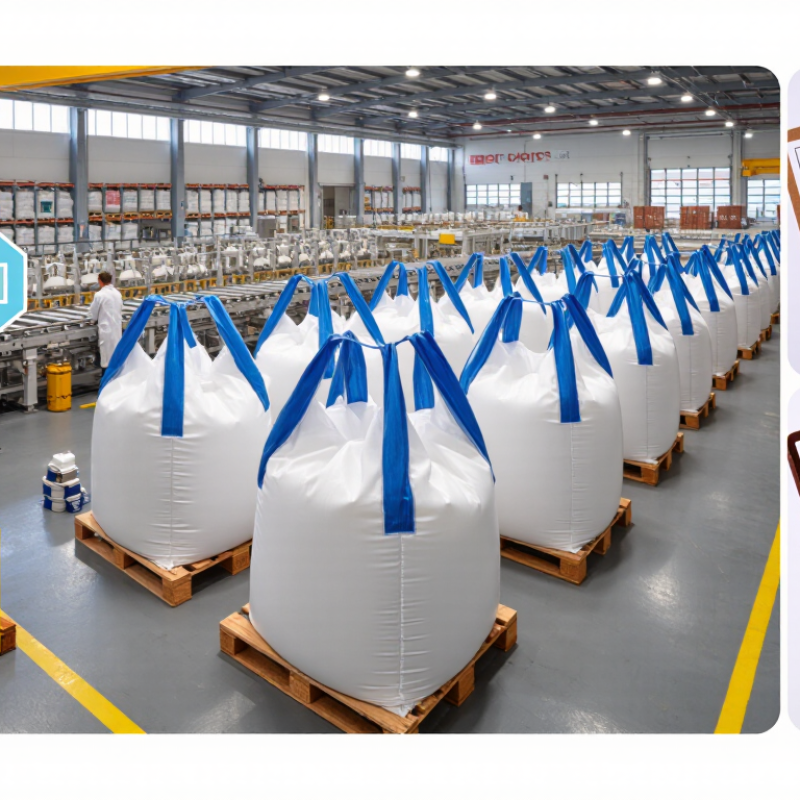
A dependable China supplier should provide more than attractive quotations. Buyers need traceable polypropylene resin, controlled weaving, tested lifting loops, and stable dimensions. A one-ton bag should sit squarely on a pallet, without distorted seams or loose threads. In food-contact applications, documented material compliance and clean production controls matter greatly. For hazardous or sensitive powders, UN-certified designs may be required after proper testing and verification.
The International Organization for Standardization identifies ISO 21898 as a key standard for packaging used with non-dangerous goods. Suppliers should understand its test principles, even when buyers follow additional regional requirements. Independent laboratory reports can confirm safe working load, top-lift performance, drop resistance, and seam strength. Certificates alone are not enough.
Experience reveals small weaknesses.
A supplier may promise customization but overlook moisture protection, liner fit, or container loading efficiency. That is where careful communication becomes valuable. Technical drawings, production samples, factory inspections, and batch records reduce uncertainty. China has a mature manufacturing base, yet no supplier is perfect. Global buyers should compare evidence, not slogans, before selecting a long-term pp jumbo bags partner.
PP Jumbo Bags Defined: 500–2,000 kg Safe Working Load
China Top PP Jumbo Bags Supplier for Global Buyers
PP Jumbo Bags Defined: 500–2,000 kg Safe Working Load
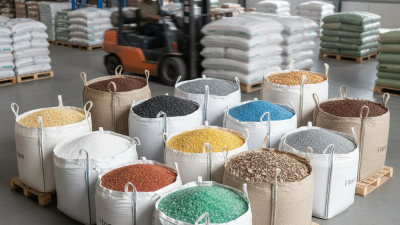
PP jumbo bags are industrial containers woven from polypropylene tapes. Their safe working load usually ranges from 500 to 2,000 kg. This rating describes the maximum load under specified handling conditions. It is not a general promise for every application.
A 1,000 kg bag may carry powder, granules, or agricultural materials. Its performance depends on fabric strength, seam quality, lifting loops, and filling design. A bag with four strong loops needs balanced lifting. Twisted straps can create dangerous pressure points. Keep the load centered. Small details matter.
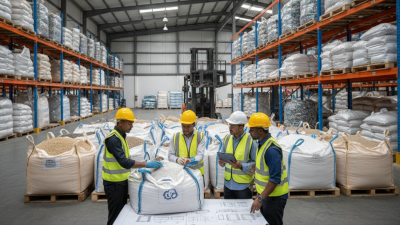
Professional suppliers should provide technical data, production records, and test information for each bag design. Common checks include fabric weight, seam strength, loop attachment, dimensions, and load testing. The packaging must also match the discharge method and transport equipment. A forklift can damage the bottom if the bag is dragged.
A clean appearance is not enough. We once inspected bags that looked excellent but had weak stitching near the loop area. That mistake deserved attention. Buyers should review the SWL, safety factor, filling ratio, storage conditions, and lifting instructions before purchase. Moisture, sharp edges, repeated handling, and poor stacking can reduce real-world performance. Never exceed the stated SWL.
China’s Manufacturing Base: 120–200 g/m² PP Woven Fabric
China Top PP Jumbo Bags Supplier for Global Buyers
China’s woven polypropylene base supports practical fabric weights from 120 to 200 g/m². This range suits many jumbo bag structures, including coated and uncoated designs. A 120 g/m² fabric feels lighter and improves folding efficiency. A 200 g/m² fabric offers a denser weave and stronger abrasion resistance. The correct choice depends on filling weight, handling cycles, and lifting design.
Grand View Research valued the global polypropylene market at about USD 126.03 billion in 2023. Mordor Intelligence estimated global polypropylene consumption at roughly 92.33 million tonnes in 2024. These figures show the scale of the raw material supply behind China’s conversion industry. However, resin availability alone does not guarantee reliable jumbo bags. Manufacturers must control tape denier, weave density, fabric weight, and seam strength.
Small details matter. A calibrated weighing system should verify fabric weight during production. Tensile tests should follow an agreed sampling plan. ISO 21898 provides useful guidance for flexible intermediate bulk containers. Still, specifications can be misunderstood. A higher g/m² value does not automatically mean better performance. It may increase bag weight, transport cost, and folding resistance. That assumption needs testing. Experienced buyers should request production samples, test records, and clear tolerances before placing volume orders.
China Top PP Jumbo Bags Supplier for Global Buyers
China’s Manufacturing Base: 120–200 g/m² PP Woven Fabric
This chart presents representative nominal basis weights within the 120–200 g/m² PP woven fabric range.
Higher fabric weight generally indicates a denser material suitable for applications requiring increased load support and durability.
Safety Standards: ISO 21898 and 5:1 or 6:1 Safety Factors
China Top PP Jumbo Bags Supplier for Global Buyers
For global buyers, safety begins with the specification, not the shipment. ISO 21898:2004 defines performance tests for flexible intermediate bulk containers, including lifting, stacking, compression, and drop resistance. These tests expose weak seams, uneven fabric, and poorly reinforced lifting loops. Small details matter. A loaded bag may face forklift impact, warehouse stacking, and repeated handling before discharge.
A 5:1 safety factor means the tested capacity reaches five times the safe working load. A 6:1 factor provides a higher margin and is commonly selected for reusable designs. The correct choice depends on filling cycles, load density, lifting methods, and storage conditions. It should never be treated as a marketing shortcut. ISO 21898 also requires attention to construction, labeling, and test evidence. Certificates help, but they do not replace batch inspection.
Smithers’ flexible packaging outlook identifies efficiency and material reduction as continuing drivers in bulk packaging demand. That pressure can encourage lighter PP fabric. It can also create risks when suppliers reduce thickness without reviewing seam strength. Responsible production includes fabric testing, loop inspection, UV assessment, and documented load tests. Buyers should request the tested SWL, safety factor, test date, and intended reuse cycle. One uncomfortable question remains: was the bag tested in a laboratory, or only described in a quotation?
Buyer Evaluation: Dimensions, Coating, UV Protection, and Load Testing
When evaluating a China PP jumbo bags supplier, buyers should verify dimensions before discussing price. Measure length, width, and height after filling. Empty-bag measurements can mislead.
A 90 × 90 × 110 cm bag may change slightly after sewing and handling. Ask for dimensional tolerance records. Check the filling inlet, discharge spout, lifting loops, and seam alignment. Coating deserves close attention. A polypropylene coating should cover the fabric evenly, without pinholes, wrinkles, or weak edges. Hold a sample under bright light. Small defects become obvious.
UV protection matters for bags stored outdoors or near windows. Request the UV additive specification and exposure-test results. Protection can weaken through long storage. Load testing should match the intended filling material and working conditions. Inspectors can fill samples, lift them repeatedly, and check seam stretching, loop damage, and bottom distortion. Test records should identify the sample batch, test date, and applied load. A safety factor must be clearly stated, not casually promised.
In my inspection experience, visual checks often miss gradual fabric creep. One bag looked perfect but sagged after several lifting cycles. That mistake changed our evaluation process. We now compare new samples with tested samples under the same light and load. Results may vary between production batches, so one approved sample is not enough. Reliable suppliers accept practical questions and provide traceable records. Supplier communication still requires patience. Details are sometimes incomplete.