| Applicable Standard |
Manufacturing and performance specification for the FIBC construction. |
Request compliance with ISO 21898 where applicable, including design, testing, handling, marking, and inspection requirements. |
Creates a consistent technical baseline for lifting, filling, discharge, and load performance. |
Declaration of conformity, specification sheet, test reports, and traceable production records. |
High |
| Safe Working Load |
Maximum permitted filled weight, including the intended product density and filling level. |
Choose an SWL that exceeds the actual filled load; common commercial ratings include approximately 500 kg, 1,000 kg, 1,250 kg, and 1,500 kg, but the selected rating must be validated for the design. |
Prevents overstressing of fabric, seams, lifting loops, and discharge components. |
Marked SWL, design drawing, load-test report, and product-specific technical data sheet. |
Critical |
| Safety Factor |
Relationship between the tested breaking load and the marked SWL. |
Use a documented safety factor such as 5:1 for single-use designs or 6:1 when reuse is specifically permitted by the manufacturer and inspection program. |
A safety factor is not a substitute for correct loading, handling, inspection, or service-life controls. |
Type-test report stating the safety factor, test method, bag design, and production traceability. |
Critical |
| FIBC Construction Type |
Electrical classification based on the product, environment, and ignition risk. |
Type A: for non-hazardous electrostatic environments.
Type B: limits propagating brush-discharge risk but does not provide grounding protection.
Type C: conductive, must be continuously grounded during filling and discharge.
Type D: dissipates static charge without a grounding connection when used within its approved conditions.
|
Incorrect selection can create an ignition hazard when combustible dust, vapor, or solvent atmospheres are present. |
FIBC type marking, electrostatic test report, user instructions, and site-specific risk assessment. |
Critical |
| Grounding Controls for Type C |
Grounding point, conductive threads, continuity, and operator procedure. |
Ground the bag before filling or discharge and keep it grounded throughout the operation. Verify the design against IEC 61340-4-4 requirements where applicable; conductive path resistance is commonly assessed against a limit of less than 1.0 × 10⁷ ohms. |
Grounding is a system control involving the bag, cable, equipment, and operating procedure—not just a grounding tab. |
Continuity test results, grounding instructions, inspection records, and site grounding verification. |
Critical |
| Dangerous Goods Approval |
UN packaging approval when transporting regulated dangerous goods. |
Use a UN-approved FIBC only when the exact bag design, packing group, material, closure, liner, and test conditions match the intended shipment. UN performance packaging is typically associated with a 6:1 safety factor, but the approval marking and certificate must be checked. |
General-purpose FIBCs are not automatically suitable for dangerous goods. |
Valid UN certificate, UN marking, design type, packing group, test level, and transport-mode requirements. |
Critical |
| Food-Contact Suitability |
Fabric, coating, liner, thread, ink, pallet, and manufacturing hygiene controls. |
For food or pharmaceutical materials, require compliance with the regulations applicable to the destination market, such as relevant food-contact rules, supported by migration or conformity documentation. |
Food-grade fabric alone does not prove that every component or manufacturing process is suitable for direct contact. |
Declaration of compliance, migration testing where required, allergen statement, hygiene program, and change-control records. |
Critical |
| Fabric and Coating |
Woven polypropylene grade, coated or uncoated surface, UV stabilization, and permeability. |
Use coated fabric for improved moisture and fine-powder containment; use uncoated or breathable construction when ventilation is required. Specify UV stabilization for outdoor exposure. |
Fabric selection affects moisture protection, dust control, aeration, filling speed, and service life. |
Fabric construction details, coating weight, air-permeability data, UV test information, and material identification. |
High |
| Liner Selection |
Loose liner, form-fit liner, liner material, thickness, antistatic properties, and sealing method. |
Choose a liner when the product requires higher moisture, oxygen, odor, or fine-powder protection. Confirm compatibility with the product and filling temperature. |
A liner can improve containment but may affect electrostatic behavior, discharge performance, and usable capacity. |
Liner material specification, thickness, sealing method, compatibility statement, and electrostatic assessment where relevant. |
High |
| Filling Inlet |
Top type, inlet diameter, closure, dust-tightness, and connection to filling equipment. |
Use a spout, duffle top, or full-open top according to the product and filling system. Fine powders generally require a controlled inlet and dust-management connection. |
Correct inlet design reduces dust release, product loss, contamination, and filling time. |
Inlet dimensions, closure drawing, dust-tightness specification, and equipment interface requirements. |
High |
| Discharge Outlet |
Outlet diameter, closure style, liner integration, and flow-control capability. |
Use a discharge spout with a secure closure for controlled emptying; select a larger or conical outlet for products that bridge or flow poorly. |
Proper discharge design limits sudden release, residual product, dust generation, and operator exposure. |
Outlet drawing, closure instructions, flow trial results, and compatibility with the receiving equipment. |
High |
| Lifting Loops |
Loop configuration, loop capacity, spacing, sling angle, and lifting equipment compatibility. |
Common configurations include four corner loops, cross-corner loops, sleeve lifts, and single-point designs. Lift only from the designated points and keep lifting angles within the supplier's instructions. |
Uneven or angled lifting can increase forces on loops and seams beyond the filled weight. |
Loop load-test results, lifting diagram, sling-angle limits, and approved handling instructions. |
Critical |
| Pallet and Forklift Handling |
Bottom construction, pallet footprint, forklift access, and load stability. |
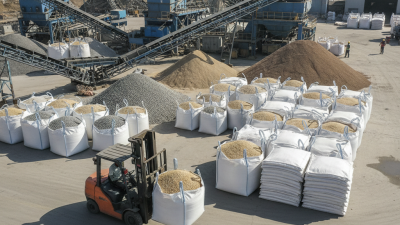
Use a flat, stable pallet or an approved lifting frame. Forks should support the load without cutting or abrading the fabric; do not drag a filled FIBC. |
Many handling failures occur during transport rather than during static load testing. |
Handling pictograms, pallet dimensions, forklift guidance, and abrasion or impact precautions. |
Critical |
| Stacking Stability |
Bag shape, filled height, base design, product flowability, and stacking method. |
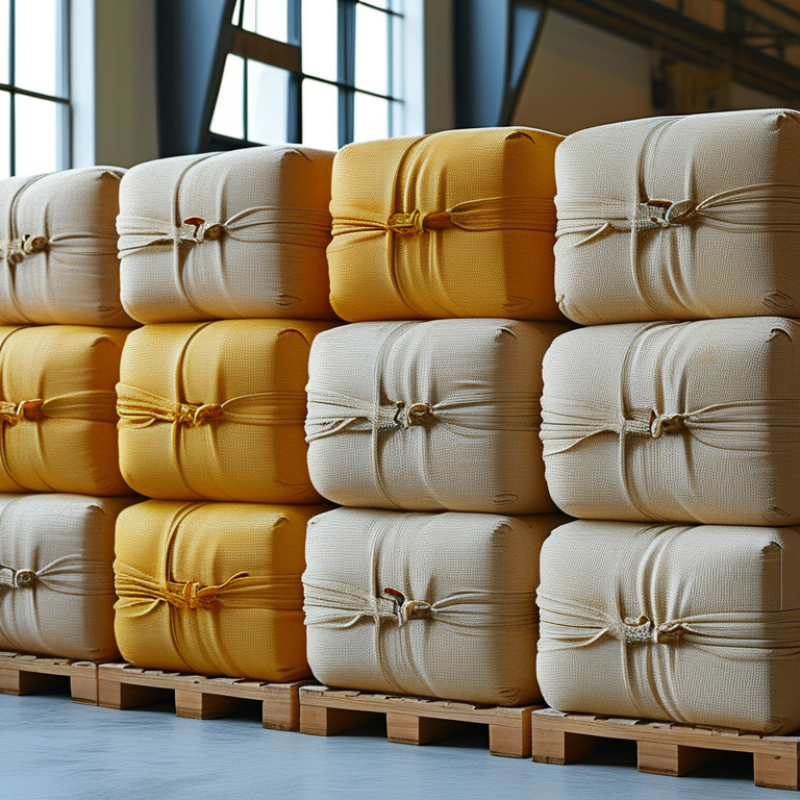
Stack only in the pattern and maximum height validated for the specific design. Avoid stacking when the product or bag is unstable, damaged, or unsuitable for stacking. |
Stacking risk depends on the filled bag shape and product behavior, not only on SWL. |
Stacking test or validation report, maximum stack height, warehouse instructions, and stability assessment. |
Critical |
| Moisture Protection |
Coated fabric, liner, top and bottom closures, seam construction, and storage conditions. |
For hygroscopic or moisture-sensitive products, specify a suitable liner and sealed closures; store filled bags under cover and away from standing water. |
Moisture can cause caking, microbial growth, weight changes, liner damage, and reduced discharge performance. |
Water-resistance data, closure specification, liner details, and storage instructions. |
High |
| Dust and Fine-Powder Control |
Fabric permeability, coated surfaces, liner sealing, inlet and outlet closures, and grounding requirements. |
Use a coated body or suitable liner with dust-tight closures; validate the filling and discharge connection under actual operating conditions. |
Reduces product loss, housekeeping requirements, exposure, and combustible-dust accumulation. |
Air-permeability data, dust-leakage test or trial results, closure drawings, and dust-control instructions. |
High |
| Product Compatibility |
Chemical resistance, temperature, abrasiveness, density, flowability, and contact sensitivity. |
Confirm compatibility with polypropylene, coating, liner, thread, and printing materials. Check maximum product temperature before filling. |
Chemicals, heat, sharp particles, and repeated flexing can weaken fabric or damage closures. |
Material compatibility statement, temperature range, product safety data, and application trial results. |
Critical |
| Reusability |
Single-trip or reusable status, inspection criteria, cleaning method, and traceability. |
Reuse only when the bag is explicitly designed and approved for reuse. Inspect fabric, seams, loops, closures, labels, and contamination status before every use. |
A 6:1 rating alone does not guarantee unlimited reuse or suitability for a different product. |
Reuse instructions, inspection checklist, cleaning validation, service history, and retirement criteria. |
High |
| Traceability and Marking |
Production lot, SWL, safety factor, FIBC type, handling symbols, and manufacturing date where required. |
Markings should remain legible and identify the bag's rated capacity, lifting method, electrical type, and relevant approvals. |
Traceability supports recalls, inspections, incident investigation, and correct warehouse handling. |
Photograph of the label, lot number, certificate linkage, and marking-control procedure. |
High |
| Inspection Before Use |
Visible damage, cuts, abrasion, broken stitching, stretched loops, contamination, and moisture damage. |
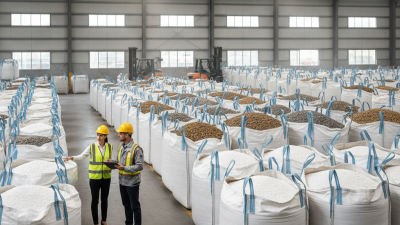
Do not use a bag with damaged lifting loops, exposed conductive elements, severe abrasion, failed closures, or any condition that could reduce safe performance. |
Routine visual inspection is an essential control before filling, lifting, transporting, and discharging. |
Documented inspection checklist, operator training record, and quarantine procedure for rejected bags. |
Critical |
| Storage and Service Life |
Protection from UV light, heat, moisture, chemicals, rodents, and unnecessary compression. |
Store clean, dry, covered, and away from direct sunlight. Follow the manufacturer's stated storage period and inspect bags after long storage. |
Ultraviolet exposure, humidity, and poor storage can degrade polypropylene before use. |
Storage instructions, UV-stabilization information, shelf-life guidance, and warehouse inspection records. |
High |
| Sustainability and Disposal |
Reusability, recyclability, material composition, liner separation, and contamination controls. |
Prefer designs that minimize material use without reducing required performance. Recycle clean polypropylene where local facilities accept it; contaminated bags may require controlled disposal. |
End-of-life options depend on construction, contamination, local regulation, and available recycling infrastructure. |
Material declaration, recycling guidance, recycled-content information where claimed, and disposal instructions. |
Medium |