Global shipping turns a simple purchase into a demanding packaging decision. These 10 tips for buying 2 ton bags begin with one question: what will the bag really carry? Product density, moisture, filling equipment, discharge design, and stacking height all affect safe performance. A bag rated for two tonnes is not automatically suitable for every cargo.
UNCTAD’s Review of Maritime Transport reports that ships carry over 80% of global merchandise trade by volume. That scale makes packaging reliability commercially important. The report also highlights disruptions, delays, and rising logistics uncertainty. A damaged FIBC can create more than product loss. It may cause loading delays, warehouse contamination, or rejected deliveries. ISO 21898 and FIBCA guidance provide useful references for design, testing, labeling, and handling. However, buyers should verify the supplier’s current documents, not rely on a copied certificate.
Packaging technology author Dr. Walter Soroka states, “Packaging is the science, art, and technology of enclosing and protecting products.” His point applies directly to 2 ton bags. The cheapest quotation may ignore liner quality, UV exposure, safety factors, or pallet compatibility. That mistake is easy to make. A better review compares test reports, stitching photographs, traceability records, and shipping conditions. Ask for samples. Inspect the seams by hand. Confirm whether the actual cargo needs UN-certified packaging or only standard industrial FIBCs. No formula is perfect. Even experienced buyers sometimes overlook humidity during ocean transport. This guide offers practical checks, while leaving room for careful supplier audits and independent verification.
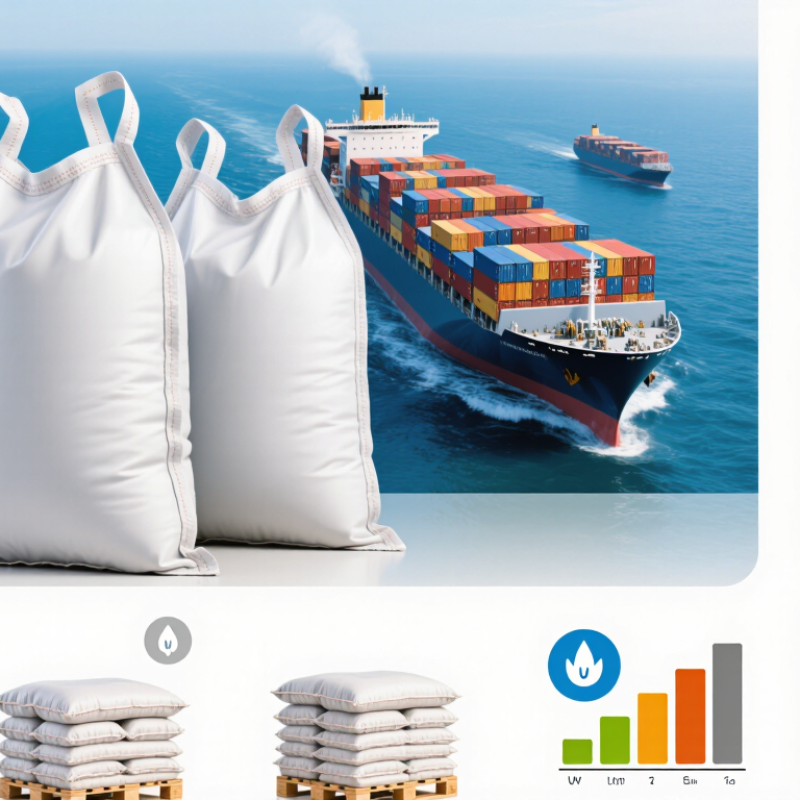
2-ton bags are flexible intermediate bulk containers designed to hold up to 2,000 kilograms of dry, bulk material. Their woven construction supports efficient storage, lifting, and container loading. Common applications include grains, minerals, powdered ingredients, and recycled raw materials. The exact design depends on product density, flow behavior, and handling equipment.
Moisture changes everything. For overseas shipping, buyers should check whether the bag includes an inner liner, coated fabric, or sealed seams. These features can reduce exposure to humidity during long sea journeys. Bag dimensions also affect loading efficiency. Measure the doorway. A full bag must pass through warehouse doors, loading bays, and container openings without excessive compression.
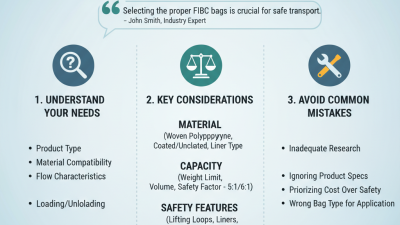
Safe working load, safety factor, lifting loops, and discharge options need careful review. Documentation should match the shipment, including product description, net weight, gross weight, and handling instructions. In practice, a 2-ton rating does not mean every bag suits every cargo. Sharp particles may require stronger fabric, while fine powders often need dust-control features. Labels matter.
A common mistake is choosing the largest capacity without testing the filling process. This can create unstable stacks or uneven weight distribution. A small trial shipment can reveal problems before a full contract begins. I would also inspect seams, loop stitching, and pallet compatibility before approval. Sometimes the cheapest specification becomes expensive after reloading, delays, or damaged cargo.
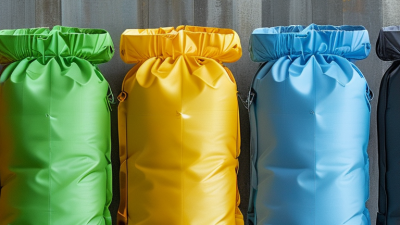
A 2-ton bag is usually a woven polypropylene FIBC, but “2 tons” is not a complete specification. Material density, fill level, moisture, and loading pressure all affect performance. ISO 21898 requires FIBCs to meet defined design, testing, and marking requirements. Ask for the safe working load, safety factor, and test certificate, not only a sales description.
The UNCTAD Review of Maritime Transport reports that over 80% of global merchandise trade by volume moves by sea. Long voyages demand stronger planning.
In practice, buyers often overlook condensation inside sealed liners.
I have seen apparently strong bags fail because sharp product edges were packed without an inner protection layer. The mistake was simple, but the delay was expensive.
Global shipping places unusual demands on 2-ton bags. UNCTAD reports that over 80% of global merchandise trade by volume moves by sea. Moisture, stacking pressure, port handling, and long transit times therefore matter.
Tip 1: Request a recent factory audit and production photos. Tip 2: Check the bag’s safe working load, safety factor, seam strength, and lifting-loop design. ISO 21898 provides a useful reference for flexible intermediate bulk containers. Tip 3: Ask for batch-level test reports, not only a general brochure. Tip 4: Inspect stitching closely. Loose threads often reveal rushed production. A clean sample is not proof of consistent quality.
Tip 5: Confirm exact dimensions before ordering. Small changes can affect pallet fit and container utilization. Tip 6: Specify woven fabric weight, coating, liner type, UV resistance, and discharge design. Tip 7: Request plain, accurate printing with traceable batch details. Tip 8: Verify certifications with the issuing body and check their validity dates. Tip 9: Match certificates to the cargo and destination market. A certificate alone can mislead. The World Bank’s 2023 Logistics Performance Index highlights customs, infrastructure, tracking, and timeliness as key logistics factors. Tip 10: Approve a loading trial and compression test before mass production. I would also keep a retained sample from every shipment. Suppliers may resist this step, but that hesitation deserves attention.
Buying 2-ton bags for global shipping requires more than comparing the unit price. Request quotations by quantity, fabric specification, coating, lifting design, and delivery term. A lower price may exclude inspection, documentation, or export packing. Ask for a complete cost sheet. Confirm whether the minimum order applies per size, color, or shipment. Small orders can carry surprisingly high setup charges.
Check the bag’s safe working load and safety factor with technical documents. Confirm dimensions against your pallets, containers, and filling equipment. A trial sample should be lifted, filled, and stored before mass production. Inspect stitching, seams, loops, and liner fit. Packaging also affects freight. Folded bags usually save space, while moisture-resistant wrapping may add cost. I once underestimated wrapping volume and paid for extra cubic meters. That estimate was wrong.
International freight depends on weight, volume, port pair, season, and delivery terms. Ask for separate ocean freight, handling fees, customs-related charges, and final-mile delivery. Compare container loading plans, not only freight quotations. Two suppliers may offer the same price but different packing density. Confirm production lead time, inspection timing, shipment documents, and damage procedures in writing. Leave space for exchange-rate changes and port delays. My practical preference is a landed-cost comparison using three order quantities. It is less exciting than chasing the cheapest quote, but usually more reliable. Recheck every assumption before payment.
| Tip | Buying Factor | Typical Data or Practical Range | Pricing and Freight Impact | What to Confirm Before Ordering |
|---|---|---|---|---|
| 1 | Safe Working Load | A 2-ton bulk bag is normally specified for a maximum safe working load of 2,000 kg. Common safety factors are 5:1 for single-trip use and 6:1 for reusable applications, subject to design and certification. | Higher safety factors, stronger lifting loops, and reinforced seams can increase the bag price by approximately 10%–30% compared with a basic single-trip design. | Request the SWL, safety factor, test report, intended filling density, and whether the bag is designed for one-way or repeated handling. |
| 2 | Bag Dimensions and Capacity | Typical 2-ton FIBC dimensions are approximately 90 × 90 × 110 cm to 100 × 100 × 120 cm. Actual capacity depends on product bulk density and the required filling and discharge configuration. | Oversized bags may use more polypropylene fabric and occupy more container space. A dimensional change of only 10 cm can affect the total cubic-meter calculation. | Confirm length, width, height, filling spout, discharge spout, top design, bottom design, and the product’s bulk density in kg/m³. |
| 3 | Fabric, Coating, and Liner | Woven polypropylene fabric is commonly selected in the approximate range of 160–220 g/m² for heavy-duty bags. A coated fabric or inner polyethylene liner may be needed for fine, hygroscopic, or moisture-sensitive materials. | Adding a coating or liner commonly raises the bag cost by about 5%–25%, depending on film thickness, antistatic requirements, and the liner’s construction. | Verify fabric weight, coating type, liner thickness, seam design, moisture protection, and compatibility with the cargo. |
| 4 | International Pricing | For standard unprinted 2-ton bags purchased in commercial quantities, an indicative factory price may fall around USD 8–30 per bag. Custom features, testing, liners, and lower volumes can move the price outside this range. | The quoted bag price may exclude tooling, samples, inspection, export documentation, inland transport, customs charges, and destination delivery. | Compare like-for-like specifications and ask whether the quote is EXW, FOB, CIF, DAP, or another Incoterm. Confirm currency, validity period, and included services. |
| 5 | Minimum Order Quantity | Standard designs may be available from approximately 100–500 pieces, while custom colors, printing, special liners, or new tooling may require 500–2,000 pieces or more. | Small orders generally have a higher unit price because setup, sampling, inspection, and export handling are spread over fewer bags. | Obtain the MOQ for standard bags and the separate MOQ for custom fabric, printing, liners, testing, and repeat orders. |
| 6 | Packaging and Palletization | Bags are commonly folded and compressed into bales or stacked on pallets. Depending on folding method and pallet use, 2-ton bags may occupy roughly 0.8–1.5 m³ per 100 bags before final loading arrangements. | Pallets improve handling but can reduce container utilization. Compression, moisture wrapping, and container desiccants may add packaging and handling charges. | Ask for packed dimensions, gross weight, pallet quantity, bale quantity, loading photos, moisture protection, and whether pallets are included in the freight calculation. |
| 7 | Container Utilization | A standard 20-foot dry container has about 33 m³ of nominal internal volume, while a 40-foot dry container has about 67 m³. Practical loading volume is lower because of packaging, access space, and weight limits. | Because each bag can hold 2,000 kg, payload weight may be reached before the container is full by volume. For dense cargo, the container’s verified weight limit is critical. | Calculate both cubic volume and gross weight, including bags, pallets, liners, and cargo. Confirm the carrier’s verified gross mass and destination restrictions. |
| 8 | International Ocean Freight | Ocean freight is normally quoted per container or shipment rather than per bag. A practical comparison should include the base ocean rate, bunker or fuel adjustments, documentation, terminal handling, and security-related surcharges. | Freight rates vary substantially by route, season, equipment availability, port congestion, and booking date. Destination charges can be significant and are often excluded from the headline ocean rate. | Request an all-in freight breakdown for the exact origin port, destination port, container type, sailing date, transit time, free time, and destination local charges. |
| 9 | Testing and Compliance | Depending on the cargo and destination, buyers may need load testing, dimensional inspection, material declarations, food-contact documentation, or UN packaging certification for regulated dangerous goods. | Testing and inspection fees may add approximately USD 100–1,000 or more per order, depending on the test scope, laboratory, number of samples, and certification requirements. | Confirm whether the cargo is hazardous, food-related, pharmaceutical, dusty, conductive, or moisture-sensitive, and identify all import documents required by the destination country. |
| 10 | Landed Cost and Supplier Comparison | Landed cost should include the bag price, customization, packaging, inland transport, export fees, ocean freight, insurance, import duty, customs brokerage, terminal charges, and final delivery. | A lower factory price can produce a higher total cost if the bags use more shipping volume, require special handling, or have high destination charges. Compare cost per usable bag, not only cost per unit. | Build a total-cost worksheet using the same specifications, quantity, Incoterm, currency, exchange-rate assumption, freight quote date, duty rate, and delivery address. |
Buying 2-ton bags for global shipping requires more than checking price and dimensions. The UNCTAD Review of Maritime Transport 2024 reports that ships carry over 80% of global merchandise trade by volume. That scale makes small documentation errors expensive. Confirm the bag’s safe working load, safety factor, fabric grade, lifting loops, liner, and UV resistance. A “2-ton bag” should not automatically mean a 2,000-kilogram working capacity. Inspect the seams. Request test certificates, production photos, and traceable batch numbers before payment.
Shipping terms also need precise wording. Incoterms 2020 defines which party handles transport, insurance, customs clearance, and risk transfer. Do not accept “delivered” without naming the exact delivery point. The World Bank’s Logistics Performance Index 2023 shows major differences in customs efficiency and shipment timeliness across countries. Build buffer time into the purchase plan. Paperwork still fails. Confirm packing lists, commercial invoices, country-of-origin details, and the verified gross mass required under the IMO SOLAS framework.
Inspection should cover both samples and mass production. Check loop stitching, bag dimensions, moisture protection, pallet stability, and label accuracy. A pre-shipment inspection can reduce surprises, but it cannot replace receiving checks. Photograph damaged packaging immediately, record quantities, and define claim deadlines in writing. After-sales support should include replacement terms, response times, spare liners, and corrective-action reports. I would not treat one perfect sample as proof of consistent production. That assumption is risky. A clear service clause gives buyers leverage when quality drifts.
Copyright 2025 © Custom Packaging Products | All Rights Reserved