China Top 10 Fertilizer Packaging Bags Manufacturers

China has become a major source of fertilizer packaging bags for agricultural suppliers worldwide. Its manufacturers serve many applications, from urea and NPK fertilizers to organic soil conditioners. Product quality, however, can vary significantly between factories.

This guide introduces ten notable Chinese manufacturers in this sector. It focuses on practical selection factors, not promotional claims. These factors include woven polypropylene strength, inner liner performance, stitching quality, printing accuracy, and moisture resistance. Bag size and filling method also matter. A 25-kilogram retail bag needs different handling performance from a one-ton bulk bag.

Reliable manufacturers usually provide clear specifications, production samples, and quality inspection records. They should explain fabric grammage, coating options, valve design, and palletizing methods. Experience with export packaging is valuable because humidity, stacking pressure, and long transit times can damage weak bags. Certifications and test reports can support confidence, but they should be verified independently.

The best fertilizer packaging bags balance protection, cost, appearance, and operational efficiency. A bright design may attract buyers, yet poor sealing can cause product loss. This sounds obvious. It is often overlooked.

The manufacturers covered here are assessed through available company information, product capabilities, industry experience, and customer-focused practices. Ranking suppliers is never completely objective. Some smaller factories may deserve more attention than public information suggests. Buyers should still request samples, confirm specifications, and inspect current production before placing large orders. Careful comparison can reduce leakage, moisture exposure, printing errors, and unnecessary replacement costs.

China Top 10 Fertilizer Packaging Bags Manufacturers

What Fertilizer Packaging Bags Are and Why They Matter

What Fertilizer Packaging Bags Are and Why They Matter

Fertilizer packaging bags are engineered containers for dry, granular, or powdered nutrients. In China, leading manufacturers commonly produce woven polypropylene, laminated paper, and multi-layer bags. These structures resist tearing during filling, palletizing, transport, and farm handling. Moisture control matters. A humid warehouse can cause caking, blocked spreaders, and costly product loss.

The International Fertilizer Association’s 2024 Medium-Term Fertilizer Outlook reports global fertilizer demand above 200 million tonnes of nutrients annually in the coming years. That scale makes packaging performance a supply-chain issue, not a cosmetic choice. Strong seams reduce leakage, while accurate weight control protects buyers and distributors. The OECD Global Plastics Outlook states that packaging created about 40% of global plastic waste in 2019. Therefore, material selection needs both durability and responsible end-of-life planning.

For buyers comparing China’s top ten fertilizer packaging bag manufacturers, testing should include drop strength, seam resistance, moisture protection, and print durability. Clear batch details support traceability. Field inspections often reveal weak stitching before laboratory tests do. No bag is perfect. Thinner materials may reduce cost, yet they can fail under rough loading. Recyclable designs may also require better collection systems. That trade-off deserves honest evaluation.

China Top 10 Fertilizer Packaging Bags Manufacturers - What Fertilizer Packaging Bags Are and Why They Matter
Rank Anonymized Manufacturer Profile Primary Bag Material Typical Capacity Common Bag Construction Suitable Fertilizer Types Key Packaging Performance Relevant Standards or Quality Controls Sustainability Features
1 Profile A
High-volume woven-bag capability
Polypropylene woven fabric with polyethylene inner liner 25–50 kg 5-layer laminated woven sack; heat-sealed or stitched top and bottom Urea, NPK, compound fertilizer and potash Good tensile strength, moisture resistance and stacking stability Dimensional inspection, seam-strength testing, drop testing and weight verification Recyclable PP structure; optimized fabric weight to reduce material consumption
2 Profile B
BOPP laminated specialist
BOPP film laminated to woven polypropylene 20–50 kg Printed BOPP outer layer with woven PP reinforcement and optional liner Granular fertilizer, blended fertilizer and agricultural soil amendments High print clarity, abrasion resistance and improved barrier protection Print adhesion, laminate bonding, seam integrity and gross-weight control Mono-material PP options can support mechanical recycling where facilities exist
3 Profile C
Valve-bag production capability
Kraft paper with polyethylene coating or paper-plastic composite 20–40 kg Multiwall paper bag with pasted valve and reinforced bottom Powdered fertilizer, micronutrients and fine mineral products Fast filling, clean valve closure and reduced dust leakage Paper basis-weight checks, valve alignment, compression and leakage testing Paper-based outer layers; recyclable performance depends on plastic coating design
4 Profile D
Heavy-duty sack capability
High-strength woven polypropylene with coated surface 25–50 kg Heavy-duty woven sack with reinforced seams and optional anti-slip coating Bulk NPK, granular potash and fertilizer blends transported over long distances High puncture resistance, strong load retention and stable pallet stacking Load-bearing, seam-slippage, tear-strength and pallet-stacking checks Reusable for suitable logistics cycles; recyclable PP construction
5 Profile E
Small-format packaging capability
PE film, laminated PP film or laminated woven PP 1–10 kg Flexible pouch or small woven bag with heat-sealed edges and tear notch Hobby fertilizer, micronutrient products and specialty formulations Convenient handling, accurate dosing and good shelf presentation Seal-strength testing, leakage testing, filling accuracy and label verification Lightweight structures and recyclable mono-material film options
6 Profile F
FIBC bulk-bag capability
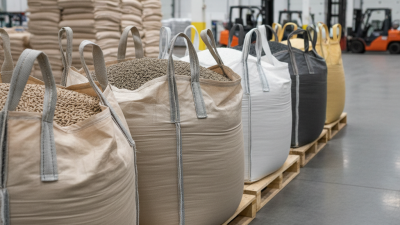
Woven polypropylene with coated or uncoated fabric 500–2,000 kg Flexible intermediate bulk container with four lifting loops and discharge spout Bulk granular fertilizer, industrial fertilizer salts and blending materials High working-load capacity, forklift compatibility and efficient bulk handling Working-load and safety-factor evaluation, seam testing and lifting-loop inspection Reusable designs available; PP fabric is recyclable after controlled collection
7 Profile G
Moisture-barrier packaging capability
Woven PP with PE liner, aluminum-coated film or high-barrier laminate 10–50 kg Multi-layer sack designed to limit moisture vapor transmission Hygroscopic fertilizer, coated fertilizer and moisture-sensitive micronutrients Improved moisture protection, reduced caking risk and extended storage stability Moisture-vapor testing, seal inspection, storage simulation and drop testing Barrier layer can be downgauged through structure optimization; recyclability varies by laminate
8 Profile H
Custom-print packaging capability
Laminated woven PP or BOPP film 5–50 kg Flexographic or gravure-printed outer layer with stitched or heat-sealed closure Retail fertilizer, private-label agricultural products and export shipments High-resolution graphics, barcode readability and strong shelf visibility Color consistency, print registration, barcode verification and laminate adhesion Water-based ink options and reduced-ink designs may lower environmental impact
9 Profile I
Export-oriented sack capability
Laminated woven PP, PE-lined PP or multiwall paper 20–50 kg Export-grade sack with reinforced construction and container-loading optimization Urea, NPK, phosphate fertilizer and international agricultural inputs Reliable sealing, strong compression performance and efficient cube utilization Pre-shipment inspection, container loading checks, drop testing and documentation control Lightweighting and recyclable PP formats can reduce packaging material intensity
10 Profile J
Technical customization capability
Woven PP, PE, kraft paper or multi-layer composite structures 10–2,000 kg Customized sack, valve bag or FIBC selected according to product flow and logistics Granular, powdered, coated and specialty fertilizer formulations Design flexibility for filling equipment, storage conditions and transport requirements Application-specific testing covering dimensions, load, leakage, seams and moisture resistance Material selection can prioritize recycled content, reusability or mono-material recovery
Data note: The manufacturer profiles are intentionally anonymized. Capacity ranges, materials and quality-control items represent commonly used fertilizer-bag specifications and manufacturing practices in China; the exact specification should be confirmed against the product, filling system, storage conditions and applicable destination-market requirements.

Key Standards for Evaluating Chinese Fertilizer Bag Manufacturers

China Top 10 Fertilizer Packaging Bags Manufacturers

Key Standards for Evaluating Chinese Fertilizer Bag Manufacturers

A strong manufacturer should prove performance, not merely show attractive samples. IFA’s Medium-Term Fertilizer Outlook 2024–2028 projects global fertilizer demand at roughly 205 million tonnes of nutrients by 2028. This scale increases pressure on bag consistency, seam strength, and moisture protection. Buyers should check compliance with GB/T 8946 for plastic woven sacks and relevant ISO packaging methods. Test reports must identify the exact material batch.

Look for controlled production details. The factory should measure fabric weight, tensile strength, drop resistance, and seam integrity. For outdoor storage, UV-aging results matter. A bag that survives filling may still fail after weeks under sunlight. Request calibration records, production traceability, and certificates of analysis linked to lot numbers. Generic PDFs are weak evidence.

The packaging should also protect fertilizer from humidity and leakage. Ask for liner specifications, heat-seal parameters, and water-resistance test conditions. The International Fertilizer Association links storage losses with poor handling and supply-chain conditions, so packaging decisions need field evidence. Sample testing remains essential. No checklist is perfect. A supplier may pass laboratory tests yet struggle with fast filling lines or rough pallets. Arrange a pilot shipment, inspect damaged corners, and compare actual weight variation against the approved sample. That practical step is often overlooked.

China’s Top 10 Fertilizer Packaging Bag Manufacturers

China’s Top 10 Fertilizer Packaging Bag Manufacturers are often evaluated by material strength, print accuracy, and production consistency. The best suppliers usually offer woven polypropylene bags, laminated options, and custom valve designs. These features help protect granular fertilizer from moisture, tearing, and rough warehouse handling. A reliable manufacturer should also provide clear specifications, batch records, and practical sample testing.

Tips: Ask for a filled-bag drop test, seam-strength data, and moisture-barrier details. Check whether the factory can maintain stable dimensions across large orders. Inspect the inner liner, stitching, and pallet stacking pattern. Small defects become expensive when thousands of bags are shipped.

In supplier reviews, I would compare fabric density, coating quality, ink adhesion, and delivery control. A bag may look strong but fail after repeated loading. This is easy to overlook. Factory visits, production photos, and independent test reports can improve confidence. Still, no single feature proves long-term reliability. A cheaper bag may reduce purchasing costs, yet increase product loss through split seams or damp fertilizer. Buyers should record test results and review them with warehouse staff. Their handling experience can reveal problems that laboratory checks miss.

Bag Materials, Designs, and Customization Options Compared

China’s top 10 fertilizer packaging bag manufacturers commonly work with woven polypropylene, kraft paper, and polyethylene liners. Each material serves a different handling need. Woven polypropylene resists tearing during stacking and transport. Kraft paper offers a firmer shape and a more natural appearance. A PE liner helps protect powder from moisture, though poor sealing can still cause leakage.

Bag design affects filling speed and warehouse performance. Valve bags support clean, fast filling, while open-mouth bags suit smaller production lines. BOPP lamination improves surface printing and scuff resistance. Flexographic printing can display usage instructions, batch details, and warning information clearly. Some suppliers offer gussets, reinforced stitching, anti-slip surfaces, and different handle options.

Small details matter. A weak seam can ruin a strong fabric.

Customization usually includes dimensions, fabric weight, liner thickness, color, printing coverage, and closure style. Experienced manufacturers should provide samples, compression tests, seam-strength checks, and moisture evaluations before mass production. Buyers should also verify recycled-content claims and production consistency through documented quality records.

Not every attractive bag performs well. Excessive lamination may increase cost and complicate recycling. Thin materials reduce weight, but they may fail under rough loading conditions. In practice, the best choice depends on fertilizer density, filling equipment, storage humidity, and transport distance. Supplier advice helps, but independent testing remains necessary.

How to Select the Right Manufacturer for Your Fertilizer Products

Selecting the right manufacturer from China’s top fertilizer packaging bag suppliers requires more than comparing prices. Start by checking material specifications, production experience, and quality records. Ask whether the factory uses woven polypropylene, kraft paper, or laminated structures suited to your fertilizer type. Granules, powders, and moisture-sensitive products need different protection.

Request samples before signing a contract. Fill them with actual fertilizer and inspect the seams, valve openings, and inner liners. Perform drop tests from a practical warehouse height. Check whether the bags remain stable after exposure to humidity and sunlight. A reliable manufacturer should provide test reports, batch traceability, and clear tolerances for weight and dimensions. Factory audits also matter. Review equipment maintenance, worker training, and storage conditions for finished bags.

Communication can reveal hidden risks. Confirm printing accuracy, color approvals, minimum order quantities, lead times, and replacement policies in writing. Ask how the supplier handles defective batches. One overlooked detail is pallet loading; poor stacking can crush the bottom layers during transport. We learned that attractive samples do not always represent mass production. Request production-line samples, not only showroom pieces. Be careful with unverified environmental claims, too. Recyclability depends on the final material structure and local recovery systems, not a slogan. A manufacturer worth considering explains limitations clearly and offers practical adjustments.