
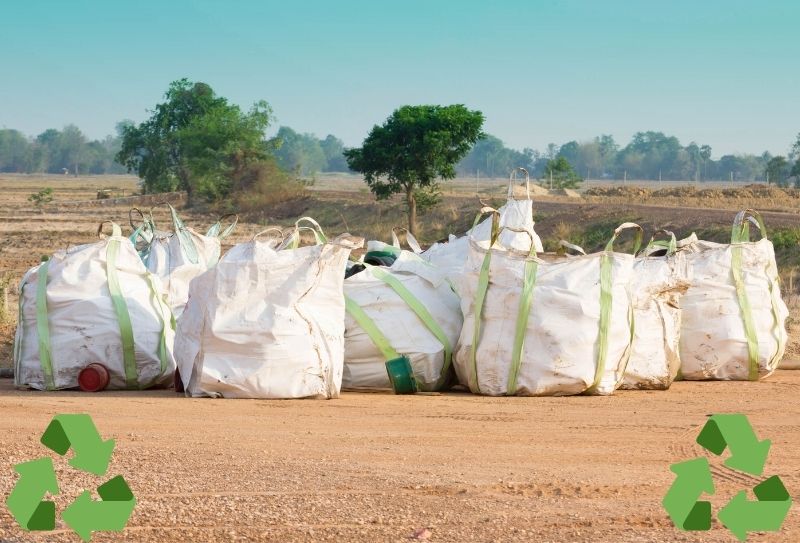
Bulk bags are commonly used to store and transport large quantities of dry goods, such as food, animal feed, and agricultural products. Most bulk bags are made from polypropylene, a type of plastic that can be recycled.
Polypropylene (PP) is a thermoplastic polymer used in a wide variety of applications, including food packaging, textiles, stationery, plastic parts and reusable containers of various types.
Recycling polypropylene bulk bags is a great way to reduce waste and help the environment. There are a few different ways to recycle these bags, such as through special collection programs or by dropping them off at a local recycling center.
When recycling polypropylene bulk bags, it is important to make sure that they are clean and dry. This will help to ensure that they can be properly recycled and reused. Once the bags are recycled, they can be made into new products, below is a list of the different materials made from recycled polypropylene.
What products are made from recycled polypropylene bulk bags?
Some of the products that can be made from recycled polypropylene include:
- Garbage cans
- Lawn furniture
- Rugs
- Rope
- Mats
- Bags
- Buckets
- pipes
- Plastic Lumber
- Auto Parts
- Cross Ties
- Plastic containers
- Insulation
- Construction Materials
How much oil is used worldwide to make polypropylene plastic?
To make just one ton of polypropylene, around 3.4 barrels (144 gallons) of oil are required – that’s almost double the amount of oil needed to produce an equivalent amount of high density polyethylene (HDPE). With global production of PP estimated at around 80 million tons per year, this equates to a huge 272 million barrels of oil used every year solely for PP – enough to fill over 42,000 tanker trucks!
The impact on climate change is also significant. To create just one ton of polypropylene creates 2.5 metric tons of carbon dioxide (CO2) – around 5% more than for HDPE. With global PP production estimated at around 80 million tons per year, this means that PP is responsible for around 200 million metric tons of CO2 emissions each year.
So, how can we reduce the amount of oil used and emissions produced from polypropylene? One option is to recycle PP – and this is where bulk bags come in.
While most bulk bags are only used once before being thrown away, many companies are now beginning to recycle these bags. This recycling process starts by collecting used bags from businesses and households.
Recycling bulk bags helps to reduce waste, conserve resources, and save energy.
Where to Recycle FIBC Bulk Bags?
There are recyclers that focus solely on recycling just bulk bags to use as a feed stock in the USA or are shipped overseas. Also, you can possibly take them to a recycling center, or if your municipality has a recycling program, they may accept bulk bags as well. You must have special machinery to be able to recycle these bags for future use, as they will get stuck in some of the typical recycling machinery.
How to get bulk bags ready to recycle?
To recycle bulk bags, you will need to remove any debris or dirt from the bags. You can do this by shaking them out, or using a hose to spray them off. Once they are clean, you can cut them open and fold them flat.
Recycling polypropylene bulk bags is a two-step process. First, the bags are shredded into small pieces. Second, the pieces are melted and formed into pellets. The pellets can then be used to make new products.
Are all bulk bags able to be recycled?
Not all bulk bags are able to be recycled. Some of the bags are used for hazardous products, so they are not able to be recycled.
If you want to start a recycling program, please contact us and we can give you all the specifics to get started.