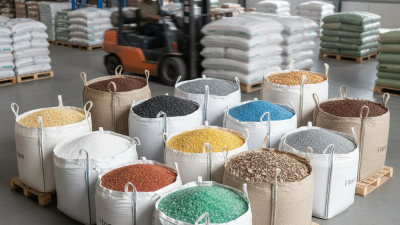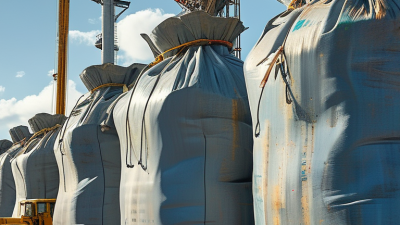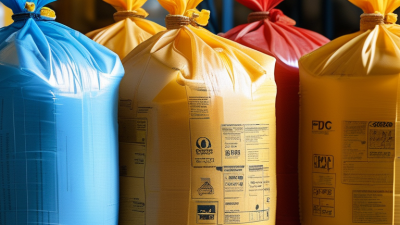
Global buyers are reassessing bulk packaging as supply chains demand lower costs, safer handling, and less material waste. Woven jumbo bags, also called flexible intermediate bulk containers, support this shift across minerals, agriculture, construction, chemicals, and food ingredients.
Grand View Research identifies flexible intermediate bulk containers as a growing packaging segment, supported by industrial production and international logistics. The Smithers report, The Future of Flexible Intermediate Bulk Containers to 2028, also highlights demand for stronger designs, improved safety, and application-specific performance. These findings matter when evaluating China-based suppliers. Market size alone does not prove manufacturing capability.
A reliable supplier should provide more than attractive quotations. Buyers should examine fabric denier, lifting-loop construction, seam strength, discharge options, liner quality, and traceability records. A typical bag may measure 90 × 90 × 110 centimeters and carry 500 to 2,000 kilograms, depending on its design and certification requirements. Small details matter.
ISO 21898 provides a recognized framework for FIBC performance and testing. For food, pharmaceutical, or chemical applications, additional documentation may be necessary, including material declarations, migration testing, and quality-control records. Requirements also vary by destination market. A supplier claiming universal compliance deserves careful questions.
China has extensive woven packaging capacity, experienced export manufacturers, and competitive production networks. However, not every factory offers consistent batch control. That is the uncomfortable part. Samples can look excellent while later shipments vary in stitching, fabric weight, or cleanliness. Global buyers should request factory audits, test reports, production photos, and pre-shipment inspections before committing. The best partnership combines verified experience, transparent communication, and measurable quality—not promises alone.
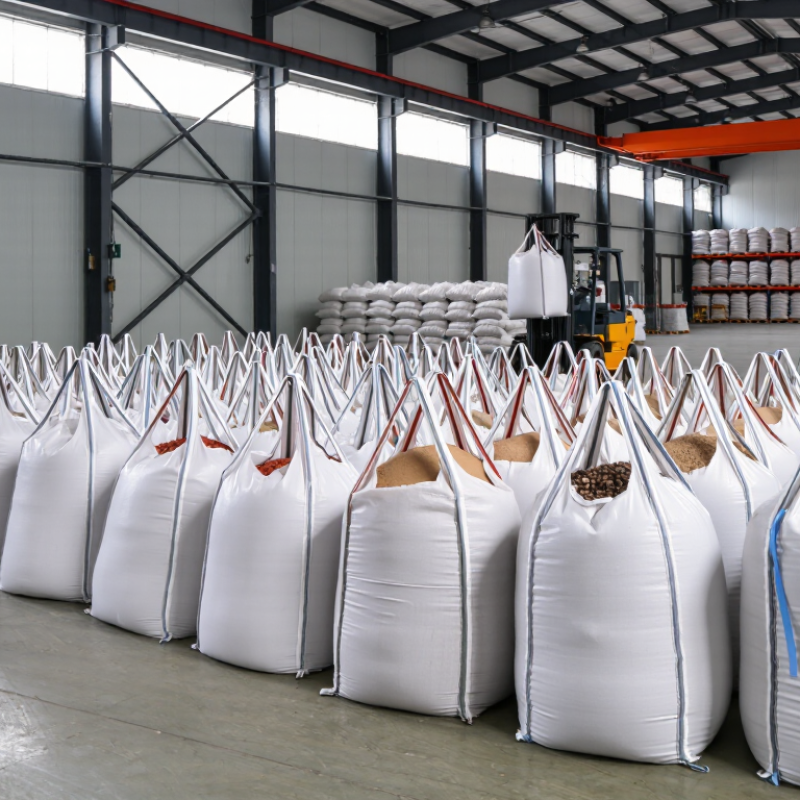
Woven jumbo bags, also called flexible intermediate bulk containers, handle dry materials from 500 to 2,000 kg SWL. Their design starts with woven polypropylene fabric, selected for strength, flexibility, and moisture resistance. Coated fabric can improve protection against humidity and fine powders. Uncoated fabric may support ventilation when airflow matters. The right choice depends on the material, filling method, and storage conditions.
Common FIBC types include standard four-panel bags, U-panel bags, circular bags, and conductive designs for controlled industrial environments. Each type behaves differently during lifting and discharge. Corner loops must align with the handling equipment. A bag rated for 1,000 kg should not automatically carry 1,000 kg in every situation. Filling speed, impact, stacking, and fabric aging can change performance.
Experienced suppliers in China usually confirm SWL, safety factor, dimensions, inlet, outlet, and liner requirements before production. Reliable quality control should include fabric checks, seam inspection, loop testing, and finished-bag load tests. Details matter. A slightly narrow outlet can slow discharge and create costly delays. I have also seen specifications copied too quickly, with no review of actual loading conditions. That mistake deserves attention. Buyers should request test evidence, clear drawings, and samples before approving a repeat order.
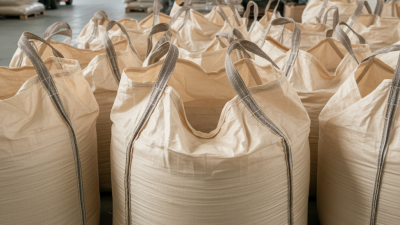
China’s FIBC manufacturing base serves bulk-material buyers across agriculture, minerals, chemicals, food ingredients, and construction. Grand View Research estimated the global FIBC market at about USD 6.3 billion in 2023. It forecasts continued growth through 2030, supported by efficient bulk packaging and reusable transport systems.
China’s advantage is industrial depth. Converters can source woven polypropylene fabric, lifting loops, liners, and printing materials within established regional clusters. China Customs export records under HS 630533 place China among the leading suppliers of polyethylene and polypropylene transport sacks. A capable factory should provide batch records, fabric weight checks, seam testing, and documented load testing against ISO 21898 requirements. Details matter here.
Capacity is not proof of reliability. Some suppliers quote quickly but explain little about resin origin, testing frequency, or container loading methods. That gap deserves attention. Global buyers should review recent inspection reports, sample measurements, moisture protection, and production lead times before placing large orders. UN Comtrade data can help compare export activity, but customs codes may combine different bag types and quality levels. The data is useful, not perfect. A practical supplier audit still reveals what spreadsheets cannot.
China Top Woven Jumbo Bags Supplier for Global Buyers?
A reliable Chinese supplier should prove performance, not simply display certificates. ISO 21898 covers flexible intermediate bulk containers, including lifting, stacking, seams, and safe working load. Ask for recent test reports linked to the exact bag design. A generic certificate may not cover your fabric, liner, or lifting loops. That distinction is often missed.
UN specification testing matters when the intended application requires approved transport packaging. Request the certificate number, test date, laboratory details, and matching production records. BRCGS Packaging Materials certification adds controls for hygiene, traceability, hazard analysis, and quality management. It is especially useful for food-contact or sensitive supply chains. According to UNCTAD’s Review of Maritime Transport 2023, ships carry over 80% of global merchandise trade by volume. Bags face long handling cycles, moisture exposure, and repeated transfers. Small stitching weaknesses can become expensive claims.
Tips: Visit the factory, if possible. Watch loop sewing and fabric inspection. Check batch records, retention samples, and corrective-action reports. Compare the declared safe working load with your real filling and lifting conditions. The World Bank’s 2023 Logistics Performance Index also shows that reliability depends on more than transport speed. Supplier communication matters. I would still avoid judging a factory from one successful sample. Production consistency is harder to prove. Ask for three recent batches, then inspect the differences.
| China Top Woven Jumbo Bags Supplier for Global Buyers? - How to Evaluate a Top Chinese Supplier: ISO 21898, UN, and BRCGS Compliance | |||||
|---|---|---|---|---|---|
| Evaluation Dimension | What Buyers Should Verify | Relevant Standard or Requirement | Objective Evidence to Request | Recommended Acceptance Benchmark | Weight |
| FIBC Product Scope | Confirm that the supplier manufactures the required woven polypropylene jumbo bag type, including construction, filling method, discharge design, liner, coating, and lifting-loop configuration. | ISO 21898 applies to flexible intermediate bulk containers for non-dangerous goods. | Technical drawings, product specifications, approved samples, bill of materials, and production-flow records. | All critical dimensions and materials match the approved specification before mass production. | 10% |
| ISO 21898 Conformity | Check whether the product design and testing process address the applicable requirements for FIBCs used with non-dangerous goods. | ISO 21898:2004, Packaging — Flexible intermediate bulk containers (FIBCs) for non-dangerous goods. | Certificate or test report showing the applicable standard, product scope, test configuration, laboratory details, and issue date. | Documentation identifies the same product construction, site, and intended use as the purchased bags. | 15% |
| UN-Certified FIBC Capability | For dangerous goods, verify that the exact FIBC design has passed the required UN performance tests and is marked correctly. | UN Model Regulations and applicable dangerous-goods packaging provisions, including the FIBC requirements in Chapter 6.5. | UN design-type test certificate, test report, UN packaging mark, certificate scope, and inspection records. | Certificate is valid for the exact bag type, packaging group, construction, and loading configuration; do not accept a generic UN certificate. | 20% |
| UN Performance Testing | Review evidence for the performance tests applicable to the certified FIBC design, such as drop, top-lift, stacking, tear, topple, and righting tests where required. | UN FIBC performance-testing requirements under the applicable dangerous-goods regulations. | Laboratory test reports, test photographs, test sample identification, conditioning records, and corrective-action history. | Test reports are traceable to the design type and show pass results without unresolved deviations. | 10% |
| BRCGS Packaging Materials | Assess the supplier’s packaging-materials management system, including hazard analysis, product safety, traceability, supplier approval, hygiene, and corrective action. | BRCGS Packaging Materials, using the issue stated on the current certificate. | Accredited certification, audit grade, certificate scope, site address, validity dates, and latest audit report or summary. | Certificate scope covers the manufacturing site and the relevant woven FIBC products; no unresolved critical nonconformity. | 15% |
| Food-Contact Suitability | For food, pharmaceutical, or sensitive applications, verify the raw materials, additives, inks, liners, coatings, and manufacturing controls. | Applicable destination-market food-contact legislation and customer specifications. BRCGS certification alone does not prove food-contact compliance. | Declaration of compliance, migration test reports, raw-material declarations, ink and coating statements, and change-control records. | Documentation covers the destination market and the complete product construction, including liner and printing materials. | 10% |
| Quality-Control Testing | Verify routine controls for fabric strength, seam strength, lifting-loop strength, dimensions, coating, liner integrity, appearance, and safe working load. | Approved product specification and applicable ISO, customer, and regulatory requirements. | Incoming inspection records, in-process inspection sheets, final inspection reports, calibration certificates, and retained samples. | Critical characteristics are inspected against documented limits, with calibrated equipment and traceable records. | 10% |
| Traceability and Recall Readiness | Determine whether the supplier can trace raw materials and finished bags by production lot and respond quickly to a quality incident. | Traceability and incident-management principles within the applicable quality or packaging-materials system. | Lot coding procedure, raw-material batch records, production records, dispatch records, mock-recall results, and complaint log. | One finished-bag lot can be traced backward to raw materials and forward to shipment records within one working day. | 5% |
| Manufacturing Capacity and Continuity | Evaluate production capacity, critical-equipment redundancy, maintenance, staffing, power continuity, and contingency planning. | Buyer-specific supply agreement and documented business-continuity controls. | Capacity statement, production schedule, maintenance plan, backup arrangements, workforce plan, and business-continuity procedure. | Capacity is demonstrated using recent production data and can support forecast volume without compromising inspection controls. | 5% |
| Shipment and Export Controls | Confirm packaging, container loading, moisture protection, documentation, labeling, and export readiness for the destination country. | Purchase contract, destination-country requirements, agreed Incoterms, and applicable transport regulations. | Pre-shipment inspection report, packing list, commercial invoice, loading photographs, container checklist, and shipping-document samples. | Shipment records match the approved specification, quantity, lot numbers, and required export documentation. | 5% |
| Supplier Audit and Corrective Action | Assess transparency during remote or on-site audits and the effectiveness of corrective and preventive actions. | Buyer audit protocol and the corrective-action requirements of the applicable certification scheme. | Audit agenda, completed checklist, nonconformity responses, root-cause analysis, evidence of implementation, and closure verification. | Major findings have documented root causes, responsible owners, deadlines, and objective closure evidence. | 5% |
| Total Evaluation Weight | 100% | ||||
China Top Woven Jumbo Bags Supplier for Global Buyers?
For woven jumbo bags, quality begins with measurable tensile strength. ISO 21898:2004 provides a recognized framework for flexible intermediate bulk containers. ASTM D6775 also defines tensile testing for woven polypropylene fabrics. In factory inspections, technicians test fabric strips, seams, loops, and lifting points separately. A 1,000-kilogram bag should not be judged by fabric strength alone. Its stitching may fail first. Small details matter.
Safety factors are equally important. A 5:1 bag is commonly tested against five times its safe working load. A 6:1 design is often selected for repeated handling. For a 1,000-kilogram rating, load testing may involve 5,000 or 6,000 kilograms, depending on the specification. Inspectors watch deformation, seam separation, loop damage, and permanent distortion. The test setup should copy real lifting conditions, including forklift movement and uneven loading. Static strength alone can mislead buyers.
Some factories still report only breaking strength. That is not enough. Humidity, ultraviolet exposure, sharp material edges, and poor filling procedures can reduce performance. I have seen strong fabric paired with weak corner seams. That result deserves rechecking, not celebration. Buyers should request test records, production samples, and traceable batch information before placing large orders. Reliable suppliers explain both the passing results and the limitations.
China Top Woven Jumbo Bags Supplier for Global Buyers?
For global buyers, MOQ and lead time should be negotiated together. Many export quotations begin around 500–1,000 woven jumbo bags, but custom printing, liners, or special loops can increase the minimum. Standard orders may ship in 15–30 days after artwork approval. Custom orders often require 30–45 days. Request a pre-production sample. It prevents expensive surprises. Confirm bag dimensions, safe working load, safety factor, fabric weight, stitching, and liner fit. ISO 21898 testing can support consistent FIBC performance, but test documents should match the actual production batch.
Customization affects more than appearance. Coated fabric can improve moisture resistance, while an inner liner may protect fine powders. Each option adds material, labor, and inspection time. UNCTAD’s Review of Maritime Transport 2024 states that over 80% of global merchandise trade by volume moves by sea. Therefore, ocean freight and port charges deserve careful comparison. Calculate total landed cost, not only the factory price: bags, tooling, inland transport, export handling, ocean freight, insurance, duty, customs clearance, and destination delivery. The World Bank’s 2023 Logistics Performance Index covered 139 economies, showing why clearance time and delivery reliability vary widely. A cheaper FOB quote may lose its advantage after delays and local handling fees. One weakness remains common: buyers sometimes compare different specifications as if they were identical. That is not a fair comparison.
Copyright 2025 © Custom Packaging Products | All Rights Reserved